Guide
Air Purifiers for Baby Nurseries
A small room, long hours, and a set of considerations where we will be explicit about the limits of what a review site should tell you.
By Scooter M. · Published · Last updated
How this page is funded: the buy links below are affiliate links. If you buy through one, we earn a commission at no extra cost to you. It does not change the order of the picks or what we say about them. Full disclosure.
The short answer
A nursery is a small room, which means the AHAM sizing threshold is low and almost any mid-range unit clears it. What actually differs is that the unit runs for very long hours in a room with someone in it - so low-speed noise, no ozone-producing stage, and secure placement matter more than CADR. Anything about infant health belongs with a pediatric clinician rather than with us.
This page is about the environment - humidity, particles, ventilation - and what changes it. It is not medical advice and we hold no medical qualification. If symptoms are persistent, severe or getting worse, that is a question for a clinician rather than a purchase.
What we will and will not tell you
We will tell you about the room: how to size a purifier for it, what the humidity band is, what the noise figures mean, and which mechanical stages we would avoid. We hold no medical or pediatric qualification, so we will not tell you what any of it means for an infant, nor make any health claim. That distinction is the whole basis of this site and it applies most strictly here.
Sizing a nursery
Nurseries are typically small, which makes this the easiest sizing case on the site. AHAM’s rule is a smoke CADR of about two-thirds the room area:
| Room | Minimum smoke CADR | Comment |
|---|---|---|
| 80 sq ft | 53 CFM | Every unit we list clears this several times over |
| 120 sq ft | 80 CFM | Comfortably within a small unit's range |
| 150 sq ft | 100 CFM | The Levoit Core 300S at 141 CFM has margin |
The margin matters here more than usual, because it means the unit can run on its quietest setting and still clear the threshold - which is the whole point in a room where someone is asleep.
What actually matters in a nursery
- Low-speed noise. The published figure to look for is the bottom of the range, not the top. 22 dB, as both Levoit Core models publish, is at the unobtrusive end.
- No ozone-producing stage. Where a unit has an ionizing stage, we would switch it off and would prefer a unit that does not have one. CARB certification is the thing to look for on any unit that does - air purifier vs ionizer.
- Placement and cables. Out of reach, cable not trailing, not on a surface it can be pulled from, and not blowing directly at the crib.
- A display that can be dimmed or switched off. Small thing, and it decides whether the unit stays in the room.
- Filter cost. This unit will run more hours per year than any other in the house, so the consumable cost compounds.
When to buy nothing at all
- The room measures in the 30-50% humidity band, there are no pets and no smoking, and the concern is general rather than a specific observed problem. There may simply be nothing for a purifier to do.
- The nursery is above a damp room or has a musty smell. Deal with the moisture - filtration does not address it.
- You have forced-air heating with an overdue filter. Change it first.
For a broader treatment of bedroom purifiers, including the noise and power figures in detail, see best air purifiers for a bedroom.
What we would buy for this
Chosen from the same registry as our roundups, on published specifications and computed running cost.
Levoit Core 300S
Bedrooms up to about 220 sq ft
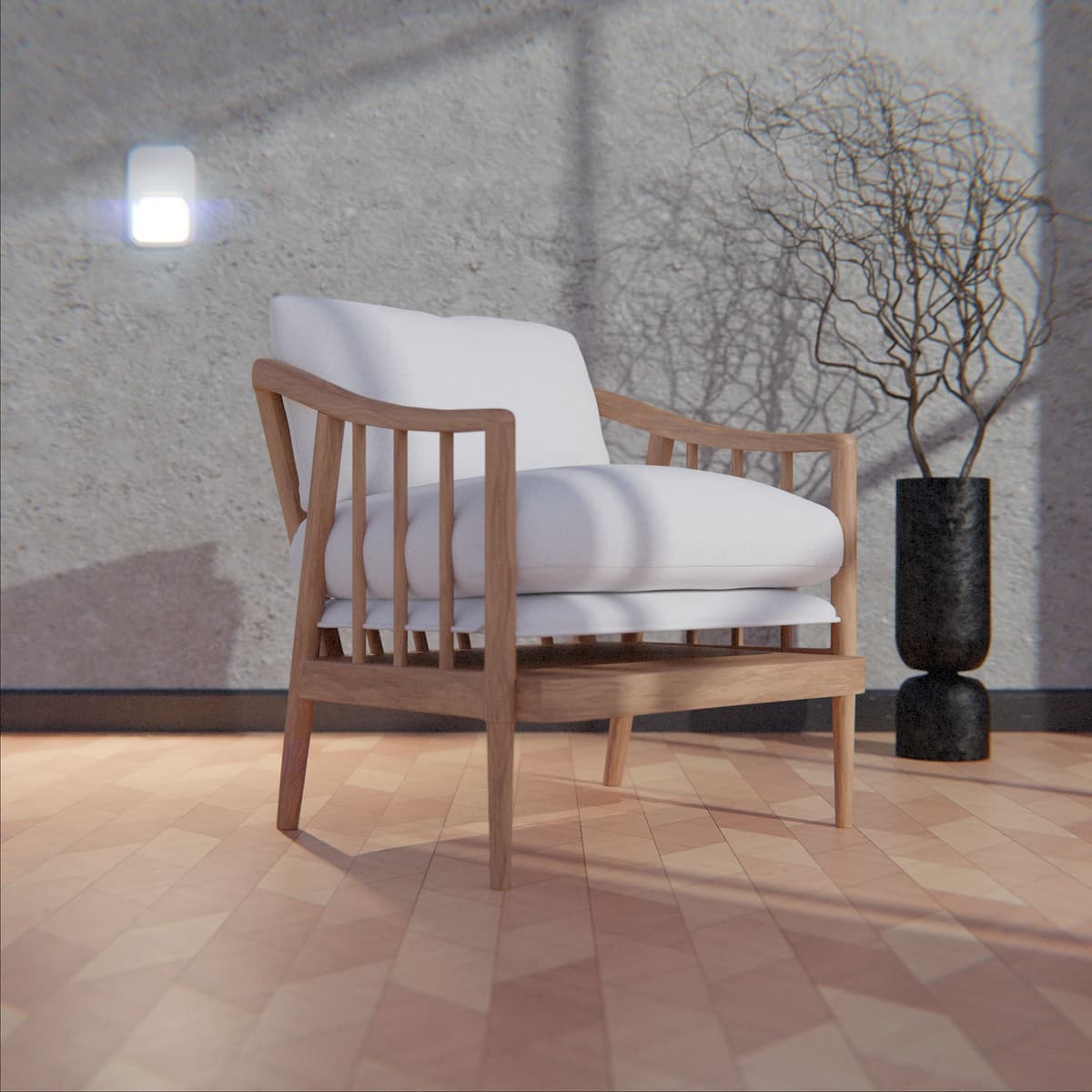
The right size for an actual bedroom. 23 W and 22 dB on low means you can run it all night without noticing it on the bill or on the pillow.
#ad We do not hold a current price for this product, so we do not show one. How we make money.
Published specifications
| Specification | Value | Source |
|---|---|---|
| CADR | 141 CFM (240 m3/h) | Levoit published specification |
| Coverage | 219 sq ft at 4.8 air changes/hr (1,051 sq ft at 1 ACH) | Levoit published specification |
| Rated power | 23 W | Levoit published specification |
| Noise | 22-50 dB | Levoit published specification |
| Filtration | 3-stage | Levoit published specification |
| Dimensions | 8.7 x 8.7 x 14.2 in, 5.95 lb | Levoit published specification |
What it costs to run
About $15-18 a year in electricity at 12 hours a day.
23 W / 1000 x 12 hours x 365 days = 100.7 kWh. At 18.34 cents/kWh that is $18.47 a year at rated power, and less on the lower fan speeds you would actually use overnight.
What is good about it
- 141 CFM clears AHAM's two-thirds rule for any room up to 211 sq ft, which covers most bedrooms
- 23 W is the lowest draw of anything we list with this much CADR
- Small enough to sit on a nightstand rather than take a corner of the floor
What is not
- Not enough for a living room - the useful 4.8 ACH figure is 219 sq ft, not the 1,051 sq ft headline
- No published filter replacement interval in the specification we could find
Who should skip this
Skip this if the room is over about 220 sq ft, or if you are trying to cover an open-plan downstairs. It will run flat out and still lose.
How it scored
- Clean air per watt9.5
- Honest coverage claim9.5
- Quiet operation9.0
- Filter economics7.5
Overall 8.8 / 10. This is our editorial score from published specifications and computed running cost. It is not a test result, and it is deliberately not marked up as a rating in this page’s structured data.
ThermoPro TP49 Hygrometer
Anyone about to buy a humidifier or a dehumidifier
An inexpensive digital hygrometer is the highest-value purchase on this entire site, because it is the one that tells you whether to buy anything else.
#ad We do not hold a current price for this product, so we do not show one. How we make money.
Published specifications
| Specification | Value | Source |
|---|---|---|
| Function | Digital temperature and relative humidity readout with a comfort indicator | ThermoPro published specification |
What is good about it
- Cheap enough to buy three and put one in the bedroom, one in the basement and one in the living room, which is what you actually want
- Gives you the reading that decides between a humidifier and a dehumidifier - a decision people routinely get backwards
What is not
- Consumer hygrometers are typically accurate to within a few percentage points, which is fine for the 30-50% question and not fine for anything precise
- No logging, so you see now rather than overnight
Who should skip this
Skip this only if you already own a hygrometer. There is no household we would tell not to measure.
How it scored
- Value for the decision it informs10.0
- Accuracy for the 30-50% question8.0
- Logging and history2.0
Overall 9.0 / 10. This is our editorial score from published specifications and computed running cost. It is not a test result, and it is deliberately not marked up as a rating in this page’s structured data.
How we ranked these
We have not tested these units. Nobody here owns one. What we did was compile each manufacturer’s published specifications, check the coverage claims against AHAM’s room-sizing rule, and compute what each one costs to run for a year at the current US average electricity price. Every figure on this page is attributed to whoever published it, and the arithmetic is shown so you can redo it.
How we rank these sets out the full method, including what would change a ranking.
Questions people ask
+−Do babies need an air purifier?
That is a health question and not one we are qualified to answer - a pediatric clinician is the right source. What we can tell you is environmental: whether the room’s humidity is in the EPA’s 30-50% band, and whether a given unit is correctly sized for the room.
+−Where should the purifier go in a nursery?
Out of reach, with the cable secured and not trailing, with clear space around the intake and outlet, and not blowing directly at the crib. Airflow across the face is drying regardless of age.
+−Is an ionizer safe in a nursery?
Some ionizing designs generate ozone as a by-product, which is why California’s Air Resources Board runs a certification program for indoor air cleaners. We would choose a purely mechanical filter unit, or switch the ionizing stage off where it is optional.
+−How quiet does it need to be?
Quiet enough to run continuously without disturbing sleep. Look at the manufacturer’s lowest published figure rather than the range - and buy with enough CADR margin that the low setting is still sufficient for the room. Two units with near-identical CADR can differ enormously here: Core 400S vs Coway Mighty.
+−Purifier or humidifier for a nursery?
Measure the room first. Below 30% relative humidity points at a humidifier - and which humidifier belongs in that room is set out in best humidifiers for babies - while inside the 30-50% band with an airborne trigger points at a purifier. The general decision is at which device do I need.