Guide
How to Lower Humidity in Your House
The most effective moisture control in most homes costs nothing. We would rather you tried these first, even though we earn nothing when you do.
By Scooter M. · Published · Last updated
The short answer
In order of how much they move the number: stop producing moisture indoors (extractor fans, lids on pans, vent the dryer outside); ventilate when outdoor air is drier; warm cold surfaces so moisture stops condensing on them; stop drying laundry indoors; check for leaks. Together these routinely take 5-15 percentage points off a room, and none of them has a running cost.
This page carries no product picks. There is nothing on it we can sell you, which is exactly why it is worth reading before the pages that do.
1. Stop making so much moisture (biggest single win)
A household generates a surprising amount of water vapor, and most of it comes from a handful of activities:
- Showers and baths. Run the extractor fan during and for 15-20 minutes after, with the door closed. A fan that vents into a loft rather than outside is moving the problem, not solving it - check where the duct goes.
- Cooking. Lids on pans, and the hood on. Boiling an uncovered pan for 20 minutes puts a substantial amount of water into the air.
- Tumble dryers. A vented dryer must vent outdoors. A condenser dryer must have its reservoir emptied. Either one venting into the room is adding liters of water per load.
- Drying laundry indoors. A single load of wet washing carries around two liters of water, and all of it ends up in the air of whatever room it dries in.
- Unvented gas heaters. Burning gas produces water vapor as a combustion product.
2. Ventilate - but check the outdoor air first
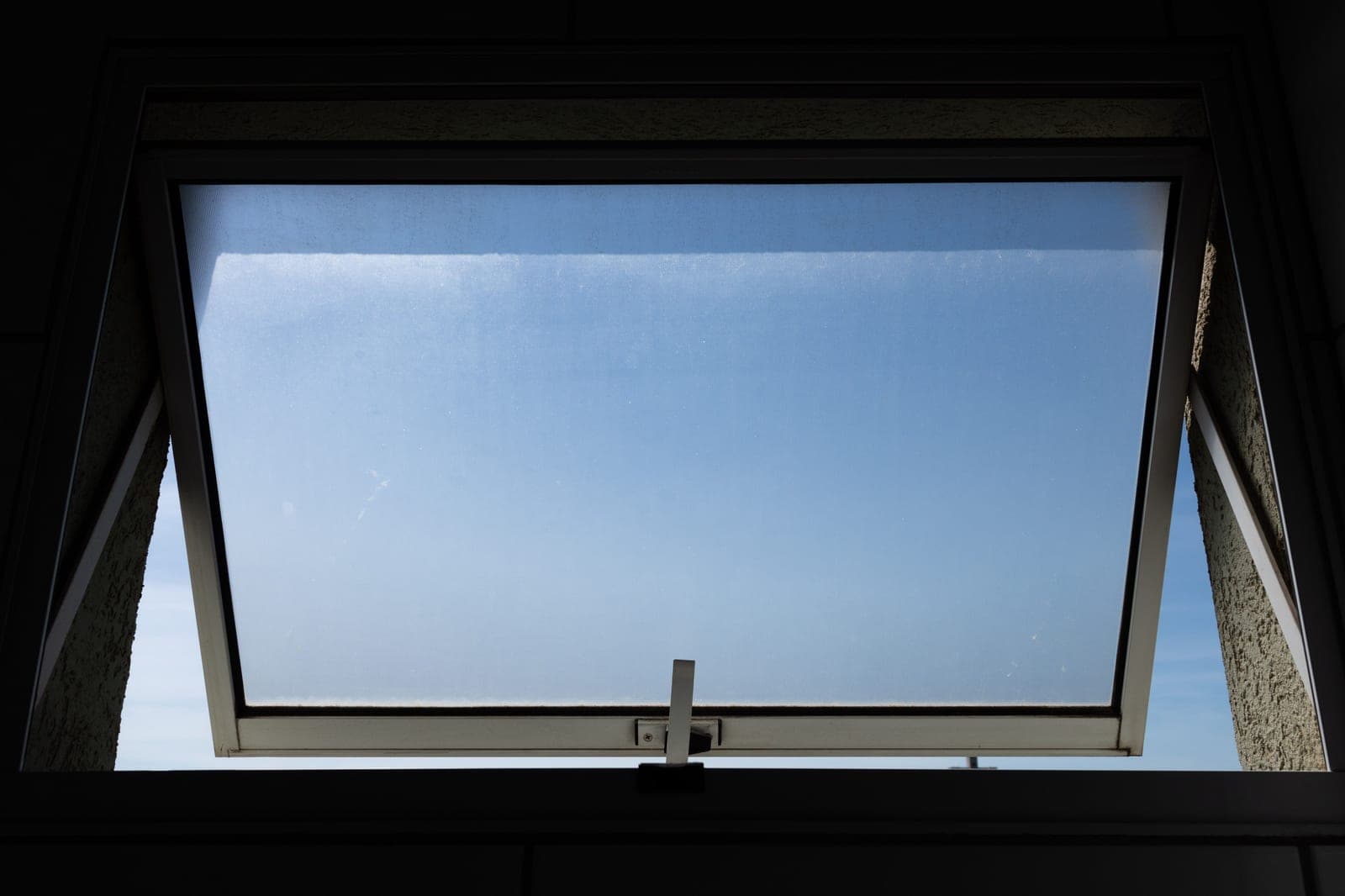
Opening windows works when the outdoor air holds less moisture than the indoor air. In cool dry weather it is the fastest dehumidifier you own and it costs nothing.
In warm humid weather it does the reverse, which is why airing out a basement in August often makes it worse: warm humid outdoor air meets cool basement surfaces and condenses on them. The number to check is the outdoor dew point, not the relative humidity or the temperature - if the outdoor dew point is below your indoor surface temperatures, ventilating helps.
3. Warm the cold surfaces
Condensation forms where warm moist air meets a surface colder than its dew point. That is why it appears on windows, on external walls behind furniture, and in unheated corners first.
- Pull furniture a few inches off external walls so air can move behind it
- Leave closet and wardrobe doors ajar on external walls
- Heat rooms a little rather than leaving some completely unheated
- Insulate cold water pipes that sweat in summer
4. Stop drying laundry indoors
It deserves its own heading because it is the single largest avoidable moisture source in many homes, and because it is so easy to overlook - the water has to go somewhere, and in a closed house that somewhere is the walls.
5. Find the leaks
Slow leaks under sinks, at washing machine connections, at toilet bases and on waste traps are common and easily missed. Dry paper towel taped under each joint overnight is a quick survey. Outside, check that downpipes discharge away from the foundation and that the ground slopes away from the house - groundwater is the most common basement moisture source and it does not respond to appliances at all.
6. Then, if it is still above 60%, dehumidify
Having done all of the above, a persistent reading above the EPA’s 60% ceiling in a basement or a specific room is a genuine case for a dehumidifier - which is when sizing it correctly starts to matter.
What does not work
- Houseplants. They release water vapor. They raise humidity, not lower it.
- Bowls of salt or rice. Absorbs a trivial amount and stops when saturated.
- Air purifiers. They filter particles. They have no effect on humidity whatsoever - which device do I need covers why this confusion is so common.
- Heating alone. Warming a room lowers relative humidity by raising the air’s capacity, but the same amount of water is still there and it will condense as soon as the room cools. Useful alongside ventilation, useless without it.
Questions people ask
+−How can I reduce humidity in a room naturally?
Ventilate when the outdoor dew point is lower than indoors, stop producing moisture indoors (extractors, pan lids, vent the dryer outside), stop drying laundry inside, and let air move behind furniture on external walls. Do these before deciding whether a machine is justified at all - is a dehumidifier worth it. In most homes those four together move the number several percentage points. If you already run air conditioning, weigh that against a dehumidifier first: dehumidifier vs air conditioner.
+−How do I reduce humidity in a garage without a dehumidifier?
Ventilation and keeping water out. Do not park a wet car in a sealed garage; the water evaporates and stays. Check that the slab is not wicking groundwater, seal gaps where warm moist air enters, and leave a vent or window cracked when outdoor air is drier.
+−Does opening windows reduce humidity?
Only if the outdoor air holds less moisture than the indoor air. Check the outdoor dew point rather than the relative humidity. In cool dry weather it is the fastest free fix; in warm humid weather it makes a cool basement wetter.
+−Will an air conditioner lower humidity?
Yes, as a side effect of cooling - condensate forms on the evaporator coil and drains away. It only helps in the rooms it serves, which is why basements usually stay humid while the rest of the house dries out - and why the thermostat, not the humidistat, is the real limitation: dehumidifier vs air conditioner.
+−How long does it take to lower humidity in a house?
Ventilation changes the reading within an hour. Removing a moisture source shows up over a day or two. Drying out materials that have been wet for months - masonry, carpet underlay, stored cardboard - takes weeks, and that is usually what people are actually waiting on.