Comparison
Air Purifier and Humidifier Combos
One appliance instead of two is a real benefit in a small room. The cost is the one number that would let you check whether it works, and almost every combo declines to publish it.
By Scooter M. · Published · Last updated
How this page is funded: the buy links below are affiliate links. If you buy through one, we earn a commission at no extra cost to you. It does not change the order of the picks or what we say about them. Full disclosure.
The short answer
Buy a combo if floor space is the binding constraint. Buy two machines if performance is. The two jobs are genuinely unrelated - a purifier removes particles from air, a humidifier adds water to it - and combining them costs you the ability to size either one. We could not find a combination unit that publishes an AHAM CADR, which means there is no way to check whether its purifier half is big enough for your room. In a studio or a dorm that trade can be worth making. In a house with room for two appliances, it rarely is.
They are not related problems
It is worth being clear about why these two functions ended up in one box, because it is not because the problems go together. Dry air and particle-laden air are different complaints with different causes and different seasons. Winter heating dries a house out; pollen peaks in spring; wildfire smoke arrives in late summer. The overlap in the calendar is smaller than the marketing implies.
What they do share is a plug, a fan and a footprint, and that is the actual product proposition: one appliance, one socket, one thing to dust. Judged on that basis a combo can be a perfectly reasonable purchase. Judged as a purifier that also humidifies, it usually is not, and the reason is the missing number.
The missing CADR, and why it matters so much
Sizing a purifier is arithmetic: floor area times two-thirds gives the smoke CADR you need. That calculation is the backbone of every purifier recommendation on this site, and it requires the manufacturer to have published an AHAM-verified CADR.
Combination units, as a class, do not. We checked the current combos we could verify as purchasable and none published one. What they publish instead is a coverage figure in square feet - typically an air-change-per-hour number, which as we set out in CADR explained is about five times more generous than the honest figure.
The consequence is simple and quite serious: you cannot tell whether a combo’s purifier half is adequate for your room. Not “it is probably fine” - you cannot tell, because the number that would answer it has not been published.
The humidifier half has its own problem
There is a second issue that gets less attention and is arguably more practical: you are deliberately raising the humidity of the air passing through a HEPA filter.
HEPA media is a dense mat of fine fibres. It is not designed to be damp, and a damp filter loaded with organic dust is a substrate. Most combos mitigate this sensibly - the humidifier module sits downstream of the filter, or detaches entirely - but it is worth checking the arrangement before buying rather than assuming.
The EPA’s guidance on humidifiers is also directly relevant and applies to the humidifier half of a combo exactly as it does to a standalone unit: clean it regularly, empty and dry the tank between uses, and do not let it run a room above the recommended band. An evaporative wick inside a combination unit is easier to forget about than a standalone tank, simply because the appliance is doing something else as well. We go through the maintenance properly in humidifier mold and cleaning.
Combo versus two machines, honestly
| One combination unit | Two separate machines | |
|---|---|---|
| Floor space | One footprint | Two |
| Sizing the purifier | Not possible - no published CADR | Arithmetic, from the published figure |
| Running only what the season needs | Only if the humidifier module detaches | Always |
| Replacing one when it fails | Both go | One goes |
| Filter near damp air | By design | Not an issue |
| Maintenance | One appliance to clean | Two, but each simpler |
| Cost | Lower than two decent machines | Higher, and better value per function |
When a combo is genuinely the right buy
Two situations, and they are both about space rather than air:
- A studio, a dorm room or a small bedroom where two appliances would physically dominate the room, and where the room is small enough that almost any purifier is adequately sized for it. At 100-150 sq ft the sizing objection loses most of its force - not because the CADR is published, but because the bar is low.
- A nursery or a room where sockets are genuinely scarce and you want one cable rather than two. This is a real constraint in older buildings and it is a fair reason to accept the trade.
Outside those two cases, the honest recommendation is two machines - and if the budget only covers one, buy the one the season needs and add the other later. That is how you end up with a purifier you can size and a humidifier you can match to the room, which is covered in what size humidifier do I need.
What we would actually do
In a room under about 150 sq ft where space is tight, the Afloia is the combo we would buy: it has a genuine three-stage filter including activated carbon rather than a fragrance pad, and the humidifier module detaches so the purifier can work alone out of season. Buy it knowing you cannot size it, and accept that as the price of the footprint.
In anything larger, or if the purifier is the part you actually care about, buy a standalone purifier with a published CADR and add a separate humidifier in November. It costs more and it works better, you can check the arithmetic on both halves, and when one of them fails in four years you replace one of them rather than both.
Quick picks
Ranked on published specifications and computed running cost. Tap any row for the full write-up, including who should skip it.
| # | Product | Best for | Score | Price |
|---|---|---|---|---|
| 1 | 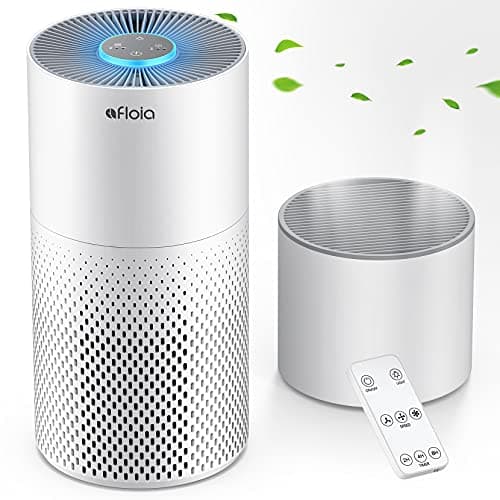 Afloia 2-in-1 Air Purifier and HumidifierA single bedroom where floor space, not performance, is the binding constraint | Best combo, with caveats | 6.8 | $119.99 - View on Amazon |
| 2 | 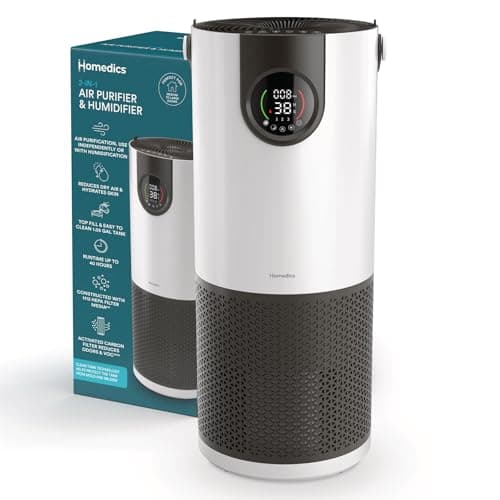 Homedics 2-in-1 Air Purifier and Evaporative HumidifierA living room where a known brand name is worth more than a specification | Best known brand | 6.3 | $112.50 - View on Amazon |
| 3 | 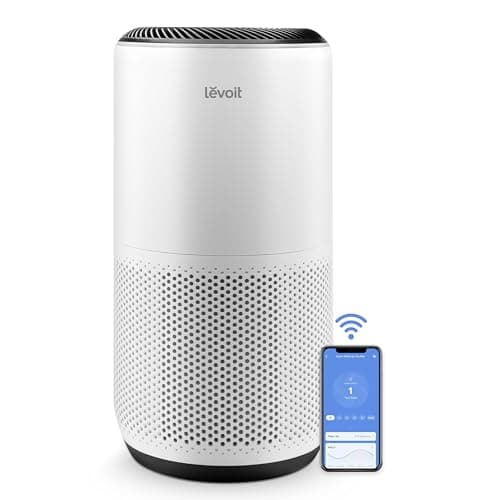 Levoit Core 400SLiving rooms and open-plan spaces | Better answer for most people | 8.6 | $189.97 - View on Amazon |
#1 - Best combo, with caveats
Afloia 2-in-1 Air Purifier and Humidifier
A single bedroom where floor space, not performance, is the binding constraint
One of the few combination units with a genuine three-stage filter rather than a fragrance pad, and the one we would pick if a combo is genuinely what the room needs. It still does not publish a CADR, which is the whole problem with the category.
#ad Price as of October 18, 2026, from Amazon. Prices change. How we make money.
Published specifications
| Specification | Value | Source |
|---|---|---|
| Filtration | 3-stage: pre-filter, activated carbon, HEPA | Afloia published specification |
| Humidification | Evaporative, detachable module | Afloia published specification |
| Noise | From 22 dB | Afloia published specification |
| CADR | Not published - see cons | No AHAM-verified figure found |
What is good about it
- A real three-stage filter including activated carbon, not a scent cartridge pretending to purify
- The humidifier module detaches, so the purifier can run alone in summer - the single most useful design decision in this category
- From 22 dB is genuinely quiet for a unit doing two jobs
- One plug, one footprint, one thing to dust
What is not
- No published CADR, AHAM-verified or otherwise. Without it there is no way to size this to a room and no way to compare it to a standalone purifier
- Evaporative humidification means a wick, and a wick is a maintenance item that grows things if neglected
- Afloia sells several 2-in-1 units under different names with different specifications, and the Amazon title does not state which model ships
- Running the humidifier raises the humidity around the HEPA filter, which is not what HEPA media is designed for
Who should skip this
Skip this if you have room for two appliances. Two separate units let you size the purifier by CADR and the humidifier by output, run each only when its season needs it, and replace one without the other.
How it scored
- Filtration for a combo8.0
- Published data3.0
- Space saved9.5
Overall 6.8 / 10. This is our editorial score from published specifications and computed running cost. It is not a test result, and it is deliberately not marked up as a rating in this page’s structured data.
#2 - Best known brand
Homedics 2-in-1 Air Purifier and Evaporative Humidifier
A living room where a known brand name is worth more than a specification
A recognised brand in the combo aisle, which counts for something in a category dominated by names that appear and vanish. It publishes no more about its actual cleaning rate than any of them.
#ad Price as of October 18, 2026, from Amazon. Prices change. How we make money.
Published specifications
| Specification | Value | Source |
|---|---|---|
| Function | Air purifier plus evaporative humidifier in one body | Homedics published specification |
| Humidification | Evaporative (wick) | Homedics published specification |
| CADR | Not published - see cons | No AHAM-verified figure found |
What is good about it
- An established brand with a retail service presence, which is not a given among combination units
- Evaporative humidification cannot over-humidify a room the way an ultrasonic unit can, because evaporation slows as the air saturates
- No white dust, which is the standing complaint about ultrasonic humidifiers on hard water
What is not
- No published CADR. The same objection as every combo here, and the reason none of them can be sized properly
- Homedics publishes coverage figures in 'sq ft of coverage per hour' on its other purifiers, which is a one-air-change number and not comparable to an AHAM CADR
- Wick maintenance, and wicks are consumables that are easy to forget
- Costs about the same as a competent standalone purifier that does publish its numbers
Who should skip this
Skip this if you would ever want to know whether it is big enough for the room. It cannot be answered from the published data, and on this site that is disqualifying for anything but a convenience purchase.
How it scored
- Brand and support8.5
- Published data2.5
- Space saved9.5
Overall 6.3 / 10. This is our editorial score from published specifications and computed running cost. It is not a test result, and it is deliberately not marked up as a rating in this page’s structured data.
#3 - Better answer for most people
Levoit Core 400S
Living rooms and open-plan spaces
The one to buy if you want a purifier that genuinely covers a living room, and one of the few spec sheets in this bracket that publishes coverage at a useful air-change rate rather than only the flattering one.
#ad Price as of October 18, 2026, from Amazon. Prices change. How we make money.
Published specifications
| Specification | Value | Source |
|---|---|---|
| CADR | 231 CFM | Levoit published specification |
| Coverage | 358 sq ft at 4.8 air changes/hr (1,718 sq ft at 1 ACH) | Levoit published specification |
| Rated power | 38 W | Levoit published specification |
| Noise | 22-52 dB | Levoit published specification |
| Filtration | 3-stage: pre-filter, HEPA, activated carbon | Levoit published specification |
| Dimensions | 10.8 x 10.8 x 20.5 in, 11 lb | Levoit published specification |
What it costs to run
About $25-30 a year in electricity at 12 hours a day, before filters.
38 W / 1000 x 12 hours x 365 days = 166.4 kWh. At 18.34 cents/kWh that is $30.52 a year at rated power - and the unit only draws its full 38 W on the top fan speed, so a mid setting lands nearer $25. Add the replacement filter, which you should price before you buy rather than after.
What is good about it
- Levoit publishes coverage at both 1 ACH and 4.8 ACH, which is unusually straight - most brands quote only the flattering 1 ACH number
- 38 W is low for this CADR, which is what keeps the running cost down
- 22 dB on its lowest setting is quiet enough to sleep beside
- Carbon, pet-allergy and smoke-specific replacement filters are sold for the same body
What is not
- We could not find a published filter replacement interval in Levoit's specification, so we are not quoting one
- The 1,718 sq ft headline is a single air change per hour, which is not a useful rate for allergies
Who should skip this
Skip this if your room is under 200 sq ft. The Core 300S covers that at lower power and lower cost, and the extra CADR buys you nothing in a small bedroom.
How it scored
- Clean air per watt9.0
- Honest coverage claim9.5
- Quiet operation8.5
- Filter economics7.5
Overall 8.6 / 10. This is our editorial score from published specifications and computed running cost. It is not a test result, and it is deliberately not marked up as a rating in this page’s structured data.
How we ranked these
We have not tested these units. Nobody here owns one. What we did was compile each manufacturer’s published specifications, check the coverage claims against AHAM’s room-sizing rule, and compute what each one costs to run for a year at the current US average electricity price. Every figure on this page is attributed to whoever published it, and the arithmetic is shown so you can redo it.
How we rank these sets out the full method, including what would change a ranking.
Questions people ask
+−Are air purifier and humidifier combos any good?
They are convenient rather than capable. The functional objection is that combination units do not generally publish an AHAM CADR, so there is no way to work out whether the purifier half suits your room. In a small room that matters less, because the requirement is low. In a living room it matters a great deal.
+−Can you use an air purifier and a humidifier in the same room?
Yes, and for most people it is the better arrangement. Keep them apart rather than side by side, so the purifier is not drawing the humidifier’s output straight through its filter, and keep the room inside the EPA’s recommended 30-50% band - above 60% you have traded a dry-air problem for a damp one.
+−Does a humidifier damage an air purifier filter?
Persistently damp HEPA media loaded with organic dust is not what the filter is designed for. Well-designed combos put the humidifier downstream of the filter or let the module detach. Separated appliances avoid the question entirely, which is one of the quieter arguments for buying two.
+−Do I need a humidifier and an air purifier, or just one?
It depends on what the air is doing, and a hygrometer answers it for a fraction of either price. Dry air, static and cracked skin point to a humidifier; pollen, dust, dander and smoke point to a purifier. They are separate problems, and the decision tree is on which device do I need.
+−Why do combo units not publish a CADR?
AHAM certification costs money and applies to the air-cleaning function specifically. A manufacturer can market a coverage figure calculated at one air change per hour instead, which looks roughly five times better and requires no testing. We treat the absence as meaningful rather than neutral.