Dehumidifier
Damp, Musty Smells & Mold
Almost every musty smell traces back to water that should not be there. A device can help with the last step, but it can never be the first one.
By Scooter M. · Published · Last updated
A musty smell is not a cleanliness problem. It is microbial growth on something wet, and the smell is the evidence rather than the issue. That reframing decides everything else in this section, because it means the first question is never “which device” - it is “what is wet, and why.”
The EPA is direct about the mechanism: “controlling indoor moisture will control the growth of indoor mold.” It states that indoor relative humidity should be kept below 60 percent, ideally between 30 and 50 percent, and that wet materials must be dried “within 24-48 hours” to avoid growth. Nothing in that guidance is about filtration, because filtration is not the lever.
Which is awkward, because the highest-volume search in this whole category is for the best air purifier for mold. Tens of thousands of people a month are shopping in the wrong aisle, and almost every page that ranks for it sells them a purifier rather than telling them. Our answer to that question is an entire page arguing the opposite, and it is the page we are most pleased to have written.
There is one distinction worth having before you read anything else here. Damp means humidity above 60%, a musty smell, condensation on cold surfaces - and a dehumidifier fixes it. Wet means liquid water is arriving: standing water after rain, efflorescence on the walls, damp that returns within a day of drying. A dehumidifier runs against that forever at roughly $200 a year and never wins.
How this page is funded: the buy links below are affiliate links. If you buy through one, we earn a commission at no extra cost to you. It does not change the order of the picks or what we say about them. Full disclosure.
Everything in this section
All Damp & Mold pages
Roundup tiles carry a live price and a buy link for their top pick, so you never have to dig for one.
comparison
Will an Air Purifier Fix Mold?
The flagship honesty page: purifiers capture spores, dehumidifiers stop the growth. Which you need and why.
Read the guidesymptom
Musty Smell in the House
The ordered sequence for a musty smell - find the water first, filter last.
Read the guideBest for Basements
Best Dehumidifiers for Basements
Basement dehumidifiers ranked, with the sizing arithmetic and running-cost math above the picks.
$211.10 - View on Amazon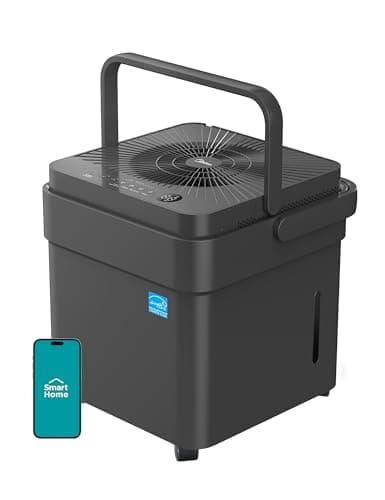 Top pick: Midea Cube 35-Pint
#ad Price as of October 18, 2026, from Amazon. Prices change. How we make money.
See the pickssizing
What Size Dehumidifier Do I Need?
The pint-capacity table by room size and dampness, plus why oversizing costs you money.
Read the guide
guide
How to Lower Humidity in Your House
Free and cheap humidity reduction, ordered by effect - the non-commercial guide.
Read the guide
Best for Small Spaces
Best Small Dehumidifiers
Mini dehumidifiers for closets, safes and bathrooms - and where their physics runs out.
$14.97 - View on Amazon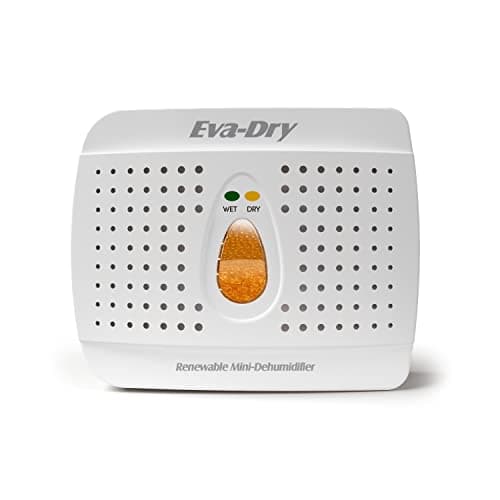 Top pick: Eva-Dry E-333 Renewable
#ad Price as of October 18, 2026, from Amazon. Prices change. How we make money.
See the pickscomparison
Dehumidifier vs DampRid
Moisture absorbers vs dehumidifiers - capacity, cost over time, and which scale each suits.
Read the guideguide
Crawl Space & Garage Humidity
Why crawl spaces and garages go damp, and the order of fixes that actually works.
Read the guidecomparison
Dehumidifier vs Air Conditioner
Both condense moisture on a cold coil. What separates them is where the heat goes.
Read the guide
symptom
Damp House Symptoms
The environmental signs of a damp home, what the EPA says about mold exposure, and the fix order.
Read the guide
Best for Bedrooms
Best Dehumidifiers for Bedrooms
One-room sizing done properly, plus why noise beats capacity in a room you sleep in.
$199.00 - View on Amazon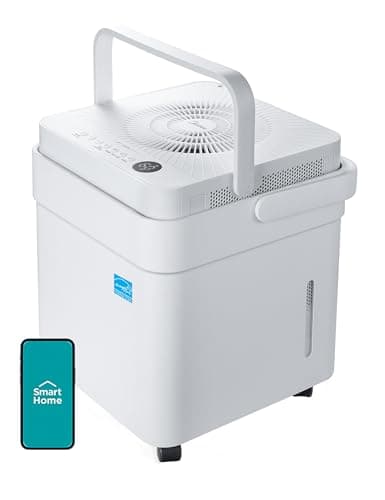 Top pick: Midea Cube 20-Pint
#ad Price as of October 18, 2026, from Amazon. Prices change. How we make money.
See the picksguide
Is a Dehumidifier Worth It?
When a dehumidifier earns its running cost, and the cases where it never will.
Read the guideBest Budget Pick
Best Budget Dehumidifiers
What each price tier really does - and the point at which cheap stops being a room dehumidifier.
$14.97 - View on AmazonTop pick: Eva-Dry E-333 Renewable#ad Price as of October 18, 2026, from Amazon. Prices change. How we make money.
See the picksreview
Midea Cube Dehumidifier Review
All three Cube sizes on federal-test capacity, efficiency and running cost - and which one to buy.
Read the guide
Best Efficiency Pick
Energy Efficient Dehumidifiers
What the federal efficiency database says, model by model - including the class where nothing qualifies.
$229.99 - View on Amazon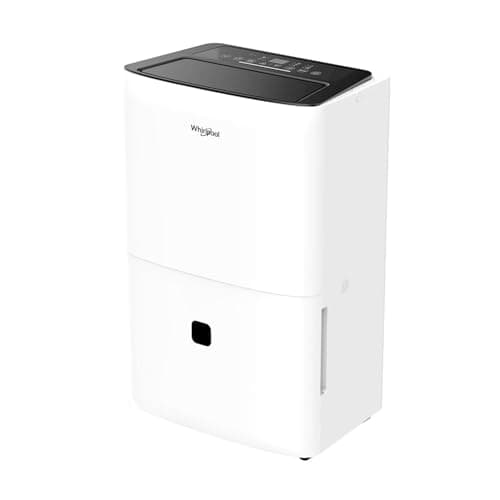 Top pick: Whirlpool 25-Pint WHAD251AW
#ad Price as of October 18, 2026, from Amazon. Prices change. How we make money.
See the picksBest Pump Pick
Best Dehumidifiers With a Pump
When a pump earns its money, when gravity beats it, and the three units whose federal data we could verify.
$243.84 - View on Amazon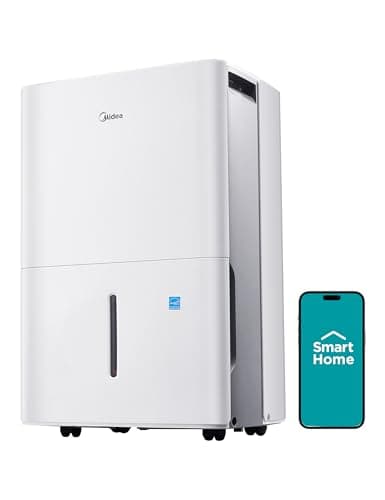 Top pick: Midea 50-Pint with Pump
#ad Price as of October 18, 2026, from Amazon. Prices change. How we make money.
See the picksroundup
Best Dehumidifiers for a Crawl Space
The vapor barrier comes first. Then: which unit, how to drain it, and why a bucket is never the answer down there.
$243.84 - View on AmazonTop pick: Midea 50-Pint with Pump#ad Price as of October 18, 2026, from Amazon. Prices change. How we make money.
See the picksroundup
Best Dehumidifiers for RVs and Campers
Desiccant, Peltier or compressor - matched to whether the vehicle has power, and what each really collects.
$14.97 - View on AmazonTop pick: Eva-Dry E-333 Renewable#ad Price as of October 18, 2026, from Amazon. Prices change. How we make money.
See the picksBest Safe Pick
Gun Safe Dehumidifiers
Heated rod versus renewable desiccant - what each physically does, and which suits a powered or unpowered safe.
$14.97 - View on AmazonTop pick: Eva-Dry E-333 Renewable#ad Price as of October 18, 2026, from Amazon. Prices change. How we make money.
See the pickscomparison
Air Scrubber vs Air Purifier
Negative pressure and 550 CFM against 65 dBA and 287 watts - and why only one belongs in a bedroom.
Read the guideguide
Will a Dehumidifier Get Rid of Silverfish?
Silverfish, booklice and springtails are damp indicators. The humidity each one needs, and the dehumidifier that removes it.
Read the guideguide
Will a Dehumidifier Stop Condensation on My Windows?
The maximum indoor humidity each glazing type can carry before the glass wets, and whether a dehumidifier gets you there.
Read the guide
The order that works, and why order matters here more than anywhere
Find the water. Stop it. Dry the material within the EPA’s 24 to 48 hour window. Bring humidity below 60%. Remove what has already grown. Only then filter the residual air. Doing these in a different sequence is the single reason musty smells come back, and it is why so many people own a dehumidifier that runs constantly and a purifier that does nothing.
The diagnostic that settles most cases costs nothing: tape a two-foot square of plastic sheet to the floor and leave it a day. Moisture underneath means water is coming through the slab, which is drainage. Moisture on top means it is condensing out of the air, which is the case a dehumidifier is actually for.
What the appliance can and cannot do
A compressor dehumidifier on a humidistat is the most expensive thing to run that we discuss anywhere on this site. At the current US average of 18.34 cents per kWh, a 345 W unit cycling roughly half the time is around $115 a year and a 545 W one is $180-200. Continuous running roughly doubles both. That figure is exactly why we push so hard on finding the water first: the appliance is not just a purchase, it is an annuity.
Size it correctly rather than buying headroom. An oversized dehumidifier reaches its setpoint quickly and then short-cycles, spending more of its running time in the compressor’s least efficient phase - so it costs about the same to run as a right-sized unit while being larger, heavier and more expensive to buy. The arithmetic is at what size dehumidifier do I need.
One specification is worth more than any other here: Integrated Energy Factor, published in liters per kilowatt-hour. It is the only figure that lets you compare two units on what they will actually cost you. Where a manufacturer does not publish one, that absence tells you something too.
And before any of it, try the free measures - ventilation timed to the outdoor dew point, not drying laundry indoors, venting the dryer outside, letting air move behind furniture on external walls. In most homes those together move the reading several percentage points, and we earn nothing from any of them.