Hygrometer or air quality monitor
Measure Your Air
The Meter half of the name. Almost every wrong purchase on this site starts with somebody guessing a number they could have read for the price of lunch.
By Scooter M. · Published · Last updated
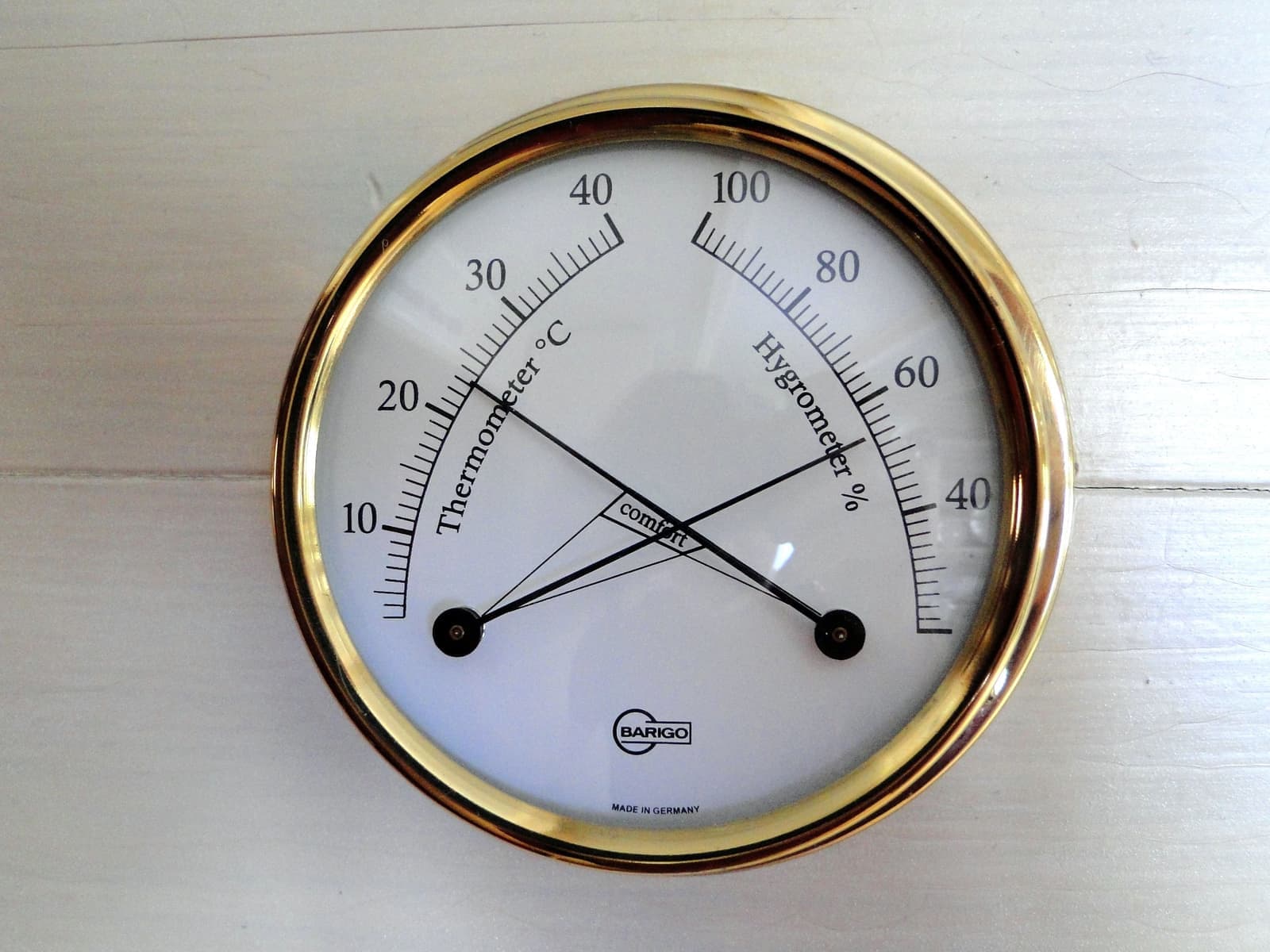
This is the Meter half of the name, and in practice it is the front door to everything else on the site. Almost every wrong purchase we describe elsewhere starts the same way: somebody guessed at a number they could have read for the price of lunch.
There are two instruments here and they are not substitutes. A hygrometer measures relative humidity and temperature, and it answers the question that decides between a humidifier, a dehumidifier and neither. A particulate monitor measures airborne particle concentration, and it answers a different question about smoke and dust. Each is completely blind to what the other measures, and they are frequently sold side by side as though they were alternatives.
For most of the problems this site covers - musty smells, winter dryness, condensation, dust mites, morning congestion - the hygrometer is the instrument you need, and it costs a fraction as much. That is the recommendation we make most often and profit from least.
The number you are reading it against is the EPA’s: indoor relative humidity below 60 percent, ideally between 30 and 50. Almost every decision on this site resolves to which side of that band you are on.
How this page is funded: the buy links below are affiliate links. If you buy through one, we earn a commission at no extra cost to you. It does not change the order of the picks or what we say about them. Full disclosure.
Everything in this section
All Measure Your Air pages
Roundup tiles carry a live price and a buy link for their top pick, so you never have to dig for one.
guide
Ideal Indoor Humidity
The humidity band table: what the EPA states, what happens outside it, and how the target moves in winter.
Read the guide
Best Air Quality Monitors
Best Air Quality Monitors
Air quality monitors ranked, with the distinction between particulate monitors and hygrometers first.
Check price on AmazonTop pick: Temtop M10 Air Quality Monitor#ad We do not hold a current price for this product, so we do not show one. How we make money.
See the picksBest Hygrometers
Best Hygrometers
Hygrometers ranked - including which one logs, and where in the room to put it.
Check price on AmazonTop pick: ThermoPro TP49 Hygrometer#ad We do not hold a current price for this product, so we do not show one. How we make money.
See the picks
guide
CADR Explained
CADR and AHAM's two-thirds room-sizing rule, with worked examples and the wildfire exception.
Read the guidecomparison
Air Quality Monitor vs Hygrometer
Particulate monitors and hygrometers compared - which instrument sees which problem.
Read the guidecomparison
Are Cheap Air Quality Monitors Accurate?
What consumer particle sensors can and cannot tell you, and how to read them usefully.
Read the guide
guide
PM2.5 Explained
What PM2.5 measures, how the AQI categories map onto it, and what actually lowers it indoors.
Read the guide
comparison
Mold Test Kits vs Air Quality Monitors
Why the EPA says sampling is usually unnecessary, and the measurement worth making instead.
Read the guide
Best CO2 Monitor
Best CO2 Monitors
NDIR versus estimated eCO2, what the readings mean, and the three monitors whose sensor type we could verify.
$189.00 - View on Amazon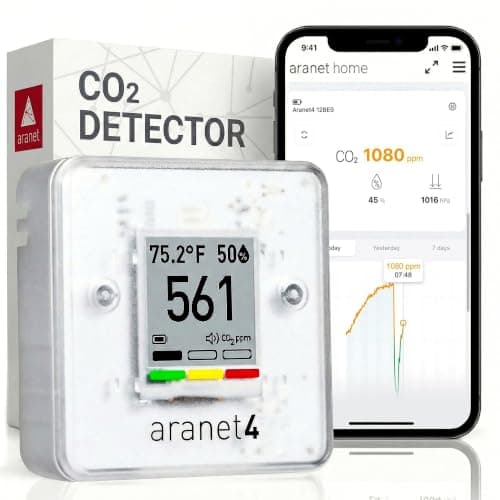 Top pick: Aranet4 Home
#ad Price as of October 18, 2026, from Amazon. Prices change. How we make money.
See the picksreview
Aranet4 Home Review
A specification-led review: what the accuracy figure promises, the calibration chore nobody mentions, and the thing it does not measure.
Read the guide
What a reading actually tells you
Below 30% and you are in dry-air territory - static, cracked skin, nosebleeds, a winter cough. Between 30 and 50% is the EPA’s stated ideal band, and if you are inside it and still have symptoms, humidity is not your problem and you should be looking at particles instead. Between 50 and 60% dust mites do well and condensation on cold surfaces becomes likely. Above 60% you are over the ceiling the EPA gives, and mold risk climbs.
Two subtleties change how you read that. First, relative humidity is relative to temperature: warm air holds more water, so the same amount of moisture reads higher in a cold room. A 45% reading in a warm living room and a 65% reading in a cool basement can represent almost the same amount of actual water, which is why cold spaces always read high and why warmth and air movement are often the fix rather than an appliance.
Second, the overnight reading is the one that matters for bedroom problems. A room at 48% at bedtime can be at 58% by morning simply because it cooled - and you slept through the part of the night when it was most hospitable to dust mites. A spot reading at 10pm never shows that, which is the strongest argument on this site for a logging hygrometer.
On CADR, and on the honest limits of cheap instruments
The other number this section explains is CADR, which is the only air purifier specification worth comparing on. AHAM’s rule is a smoke CADR of roughly two-thirds the room’s area - their own example being 132 CFM for a 200 sq ft room - with a 25% uplift for 10-foot ceilings and a different, higher rule for wildfire smoke.
As for accuracy: consumer hygrometers are typically good to within a few percentage points, which is entirely adequate for a decision as coarse as which band you are in. Consumer particle monitors are a different case - optical sensors infer mass from scattered light using assumptions that vary with what the particles actually are, so they are reliable for comparison and unreliable as absolute figures. Read them against your own house over time rather than against a published standard, and you get something genuinely useful from an approximate instrument.
If you own one thing from this section, own a hygrometer. Put it in the room with the problem, read it in the morning, and let the number decide what you buy next.