FAQ
Frequently Asked Questions
The questions people actually arrive with - about the devices, about the numbers, and about us.
By Scooter M. · Published · Last updated
Grouped roughly: which device does what, what the numbers mean, and how this site works. If your question is not here, the contact page reaches us directly.
Questions and answers
+−Air purifier, humidifier or dehumidifier - which do I need?
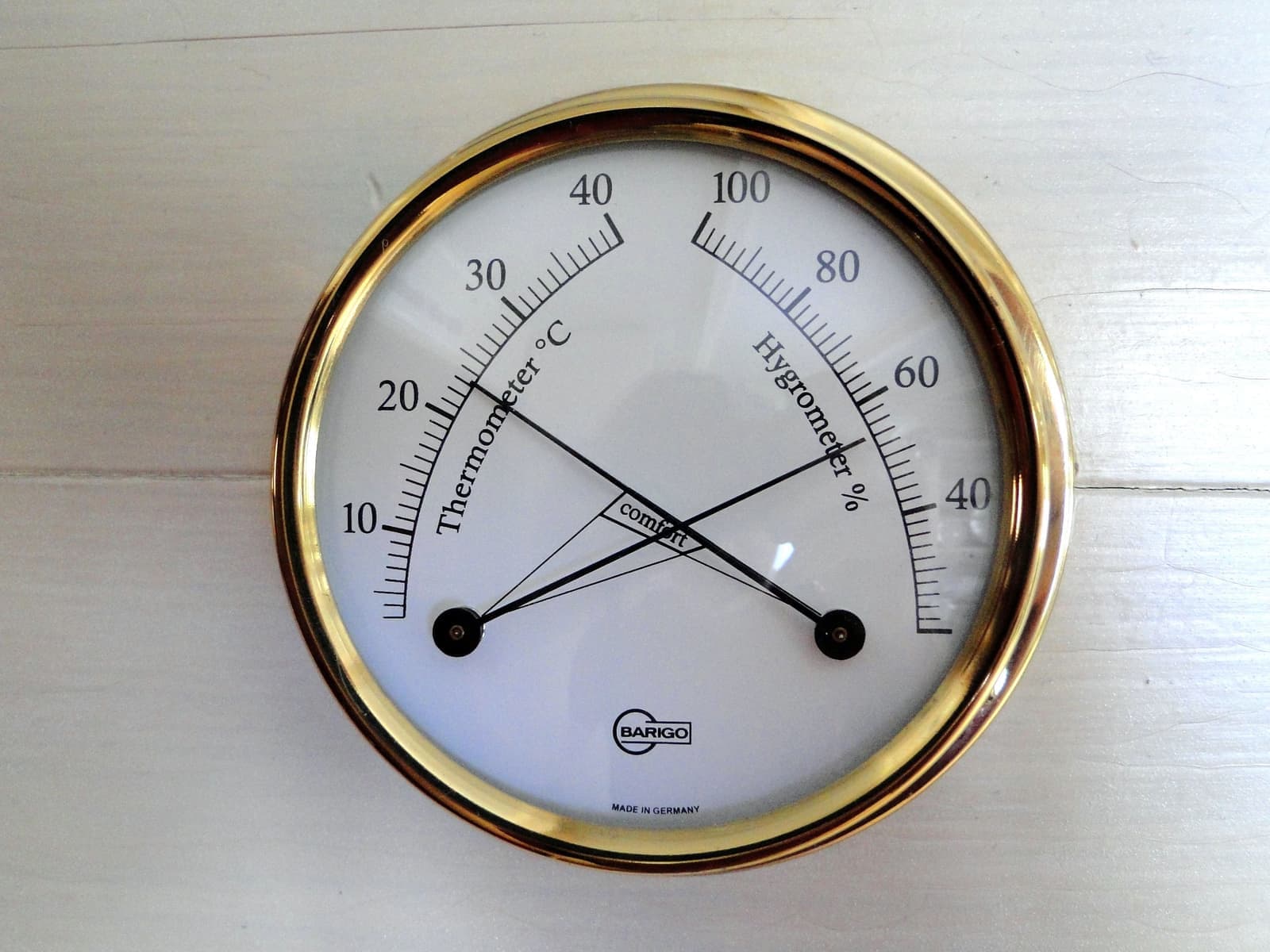
A purifier removes airborne particles and changes nothing about humidity. A humidifier adds moisture. A dehumidifier removes it. A hygrometer tells you which of the three you need, and it is the cheapest of the four. The full decision is at which device do I need.
+−What should indoor humidity be?
The EPA states that indoor relative humidity should be kept below 60 percent, and ideally between 30 and 50 percent. Below 30% you get static and dry skin; above 50% dust mites do well; above 60% mold risk climbs. In hard winter cold you may need to run below 30% to avoid condensation on the windows. Full table at ideal indoor humidity.
+−Will an air purifier fix mold?
No. A purifier removes spores from the air passing through it, but mold grows on moisture and a purifier does not change moisture. The EPA is direct about it - controlling indoor moisture is what controls indoor mold. Stop the water, dry the material within 24 to 48 hours, and bring humidity below 60%. Full argument at will an air purifier fix mold.
+−What is CADR and what number do I need?
Clean Air Delivery Rate, in cubic feet per minute - the volume of air per minute a purifier delivers free of a given contaminant. AHAM’s rule is to choose a smoke CADR of about two-thirds your room’s area, with their own example being 132 CFM for a 200 sq ft room. For wildfire smoke, AHAM recommends a smoke CADR equal to the square footage instead. See CADR explained.
+−Why does one purifier claim 1,718 sq ft and 358 sq ft at the same time?
Because coverage depends on how many times per hour you want the room’s air replaced. The larger figure is one air change per hour; the smaller is 4.8 air changes per hour, which is the rate AHAM’s sizing assumes for allergen removal. Both are true statements about the same machine, and only the second is useful if you have allergies.
+−What size dehumidifier do I need?
Roughly 20-22 pints per 500 sq ft for a merely damp space, stepping up a size for each level of wetness. A 1,000 sq ft damp basement wants 25-30 pints; the same space with visible moisture wants 35-40. Do not buy the largest unit to be safe - an oversized dehumidifier short-cycles and costs about the same to run. Table at what size dehumidifier do I need.
+−Do air purifiers help with dust?
With airborne dust, yes. With the dust you wipe off shelves, barely - most of that is heavy enough to settle before a filter could reach it. If your complaint is having to dust, a purifier will disappoint you. See do air purifiers help with dust.
+−Do air purifiers help with smells?
Only through their activated carbon stage, and in proportion to how much carbon is in it. HEPA filters catch particles and do nothing at all for gases and odors. Carbon capacity is rarely published, which makes it the hardest thing to shop on. See HEPA vs carbon filters.
+−How much do these devices cost to run?
Very different amounts. At the US average residential rate of 18.34 cents per kWh and 12 hours a day: a 23 W bedroom purifier is about $18 a year, a 70 W one is $56, a 280 W warm-mist humidifier is about $225, and a 545 W dehumidifier on a humidistat is $180-200. Over three years those gaps frequently exceed the price difference at purchase.
+−Do you actually test these products?
No, and we say so on every page. We have no lab, we do not own these units, and we will not claim otherwise. What we do is compile published specifications, check coverage claims against AHAM’s sizing rule, compute annual running costs, and show the arithmetic. The full method is at how we rank.
+−Then why should I trust your rankings?
Because every number is attributed to whoever published it and every calculation is shown, so you can check any of it without asking us. A lab cannot be verified from your side of the screen; arithmetic can. Where we could not find a published figure, we write that rather than estimating - you will see that in several product write-ups.
+−How does Mist & Meter make money?
Affiliate commission. We participate in the Amazon Associates Program and earn from qualifying purchases at no extra cost to you. We take no sponsored placements, accept no free products, and sell no position in any ranking. Full detail at affiliate disclosure.
+−Does the commission change your rankings?
No. The commission rate is effectively identical across the products we compare, so there is no commercial reason to prefer one over another. Several of our pages exist to talk readers out of buying anything at all, which is the clearest evidence we can offer.
+−Why do some products say 'Check price' instead of showing a price?
Because we do not currently hold a live price for that product. Prices on this site come only from a live data layer and carry the date they were checked; if that data is more than 48 hours old it disappears. We would rather show you nothing than a number that has moved.
+−Why is the site organized by symptom rather than by device?
Because the person searching usually does not know which device they want - they know their eyes itch, or the basement smells, or they wake up congested in January. Filing by device makes the reader produce the answer before they are allowed to ask the question. More at about Mist & Meter.
+−Can you tell me whether my symptoms are caused by my house?
No. This site is about rooms, not bodies. We hold no medical qualification and we do not diagnose. We will tell you what your humidity reading means for the room and what changes it; what any symptom means is a question for a clinician.
+−Do I need a device in every room?
For purifiers and humidifiers, largely yes - air does not move meaningfully between closed rooms whatever the coverage claim says, so each treats the room it is in. For dehumidifiers, usually not: damp tends to have one source, and treating that space handles the rest.
+−What is the single cheapest thing I can do for my indoor air?
If you have forced-air heating, change the furnace filter. It treats every room the ducts reach, it costs a few dollars, and it is very often overdue. After that, a hygrometer - it costs less than one replacement filter and it tells you whether you need to buy anything else at all.
+−I found an error on one of your pages. What happens?
Email info@mistandmeter.com with the page and the figure. We respond within seven days, correct confirmed errors in the same window, and mark the correction visibly on the page. Policy at editorial policy.
+−How often is the site updated?
Prices refresh daily. Every roundup is verified quarterly - each product still available, still stocked, specifications re-checked. Pages carrying a year in the title are rewritten annually rather than date-stamped. Discontinued products are removed or replaced within the quarter.