Air purifier with carbon
Smoke & Odors
Smoke is two problems in one: particles you can filter and gases you can only adsorb. Most purifiers are much better at the first than the second.
By Scooter M. · Published · Last updated
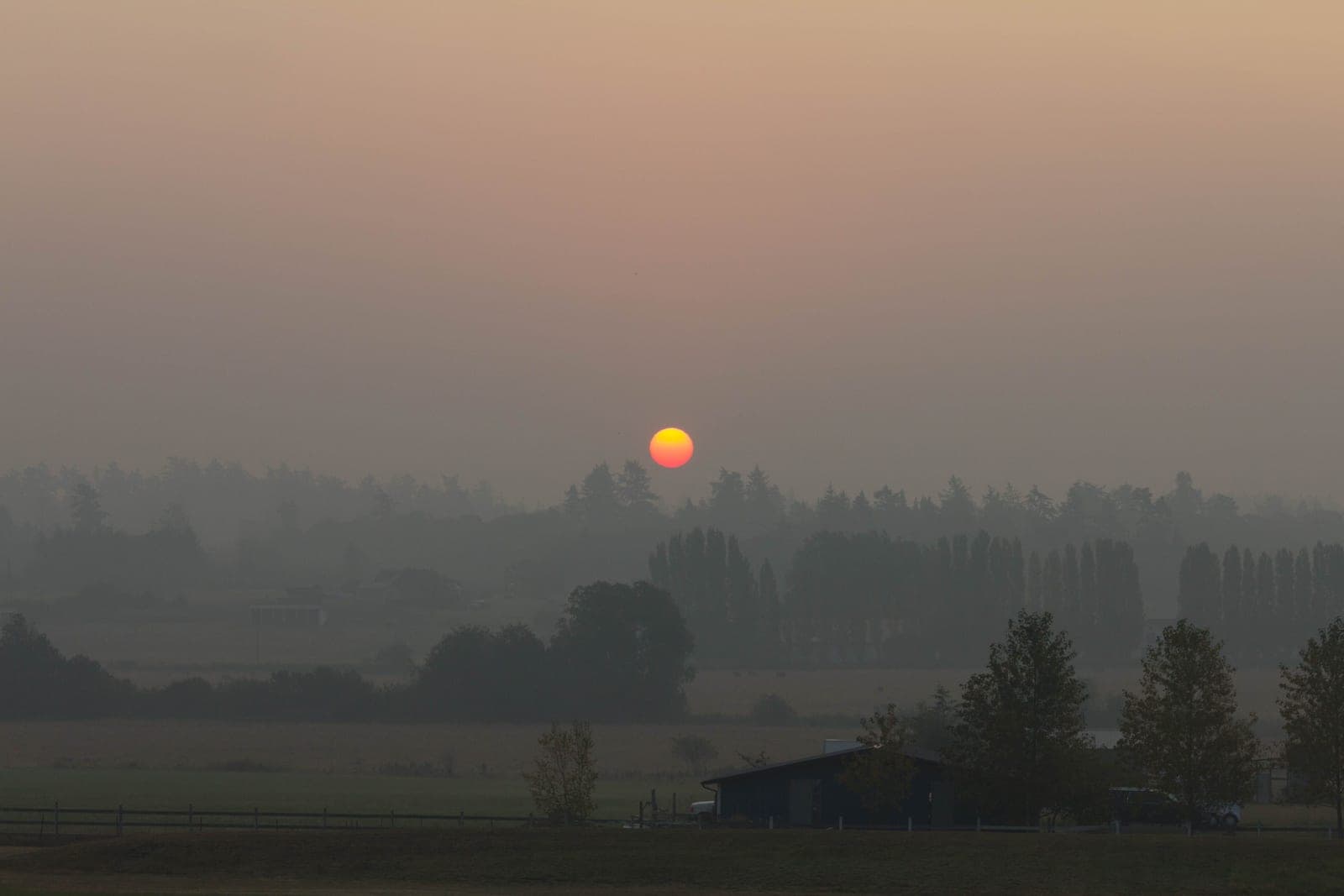
Smoke is two problems wearing one name. There is a particulate fraction - the fine solids that a particle monitor sees and that a HEPA filter captures - and a gaseous fraction of volatile compounds, which is what you actually smell. They are removed by completely different mechanisms, and nearly all the confusion in this category comes from treating them as one thing.
A HEPA filter is a mat of fine fibers that intercepts solid particles. Odor molecules are orders of magnitude smaller than anything a fiber can catch, so HEPA does essentially nothing about smell. That job belongs entirely to the activated carbon stage - and carbon capacity varies enormously between units while being almost never published.
This is why a purifier can drop a monitor reading dramatically during a smoke event and leave the room still smelling of smoke. Both observations are correct. They are measuring different halves of the same problem, and the unit is doing well at one of them.
The other thing worth knowing before you read further: for wildfire smoke, AHAM recommends a smoke CADR equal to the room’s square footage rather than the usual two-thirds. That is a 50% increase in required capacity, because during an event you are not cleaning a fixed volume once - you are running continuously against air coming in.
How this page is funded: the buy links below are affiliate links. If you buy through one, we earn a commission at no extra cost to you. It does not change the order of the picks or what we say about them. Full disclosure.
Everything in this section
All Smoke & Odors pages
Roundup tiles carry a live price and a buy link for their top pick, so you never have to dig for one.
comparison
HEPA vs Carbon Filters
Particles vs gases: which filter stage does what, and why odor performance is barely advertised.
Read the guideBest for Smoke
Best Air Purifiers for Smoke
Smoke purifiers ranked on carbon stage and published CADR, with running costs computed.
Check price on AmazonTop pick: Winix 5500-2#ad We do not hold a current price for this product, so we do not show one. How we make money.
See the pickssymptom
Wildfire Smoke Indoors
The sequence for a smoke event: seal first, then filter, sized to AHAM's wildfire rule.
Read the guideguide
Pet & Litter Box Odors
What a purifier can and cannot do about pet odor, and the free changes that work better.
Read the guidecomparison
Air Purifier vs Ionizer
Filtration vs ionization - what each does with the particles, and why we default to filters.
Read the guideguide
Getting Rid of Smoke Smell
Why smoke smell persists after the air is clear, and the surface-first order of operations.
Read the guide
guide
Activated Carbon Explained
What activated carbon does, why quantity decides it, and why the spec sheet rarely tells you.
Read the guide
guide
VOCs & Off-Gassing
What VOCs are, why indoor levels beat outdoor ones, and why ventilation beats filtration here.
Read the guide
comparison
Air Purifier vs Diffuser
A diffuser adds an aerosol; a purifier removes particles. Why they are not alternatives.
Read the guideBest for Apartments
Best Air Purifiers for Apartments
Renting changes the brief: you cannot fix the source, so carbon and continuous running matter most.
$154.98 - View on Amazon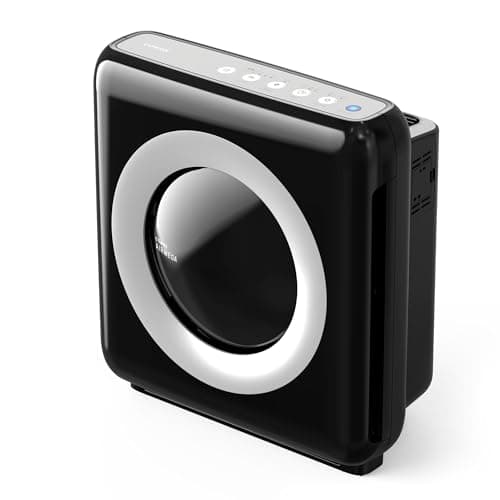 Top pick: Coway Airmega AP-1512HH Mighty
#ad Price as of October 18, 2026, from Amazon. Prices change. How we make money.
See the picksreview
Coway Airmega AP-1512HH Mighty Review
The per-speed wattage is the story: $6 a year at speed one, $121 at speed three.
Read the guide
roundup
Best Air Purifiers for Offices and Dorm Rooms
Small shared spaces you cannot modify - sized by CADR, with the ozone rule dorms enforce.
$169.99 - View on Amazon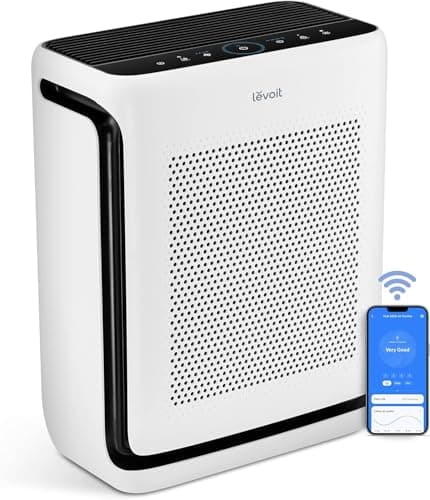 Top pick: Levoit Vital 200S
#ad Price as of October 18, 2026, from Amazon. Prices change. How we make money.
See the picksroundup
Best Air Purifiers for Kitchen Smells
Cooking smells are gases. Why carbon weight is the spec that matters - and why the extractor hood beats all of them.
$154.98 - View on AmazonTop pick: Coway Airmega AP-1512HH Mighty#ad Price as of October 18, 2026, from Amazon. Prices change. How we make money.
See the picksBest for VOCs
Best Air Purifiers for VOCs
Carbon by weight, not by mention. The honest tension between carbon capacity and published CADR.
$212.99 - View on Amazon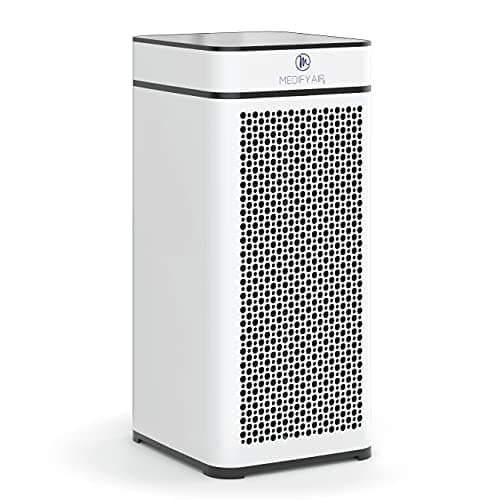 Top pick: Medify MA-40
#ad Price as of October 18, 2026, from Amazon. Prices change. How we make money.
See the picksroundup
Best Air Purifiers for 3D Printing
Filament choice, enclosure and ventilation first - then a purifier with real carbon, sized properly.
$212.99 - View on AmazonTop pick: Medify MA-40#ad Price as of October 18, 2026, from Amazon. Prices change. How we make money.
See the picks
comparison
UV & Ozone Air Purifiers
What the EPA and CARB actually publish about UV, PCO and ozone stages - and the certified, filter-only units we would buy instead.
Read the guide
What actually works, and the free step that beats the expensive one
During a smoke event, sealing the house outperforms any appliance you can buy that afternoon. A purifier only cleans the air that is in the room; if smoke is entering continuously through gaps, the unit is fighting a source rather than finishing a job. Closing windows, shutting the fireplace damper, blocking the gap under the garage door, closing trickle vents and turning off extractor fans - which pull outdoor air in to replace what they exhaust - costs nothing and has the largest single effect.
After that, treat one room properly rather than the whole house badly. Choose the bedroom, close the door, and size the unit to AHAM’s wildfire rule. A 300 sq ft bedroom under that rule needs 300 CFM of smoke CADR, which is beyond any single mid-range unit - so the honest answer for that room is two units, and knowing that in advance is worth more than either of them.
Smell is a surface problem more often than an air problem
Airborne smoke clears within hours once the source stops. A smell that lasts for days or weeks is residue on walls, ceilings, carpet and fabric, continuing to release volatile compounds into the room - and a purifier cannot reach any of it. Buying a filter for a surface problem produces a machine that runs continuously, saturates its carbon repeatedly, and never finishes.
The order for that case is ventilate, replace the HVAC filter, wash the hard surfaces with a degreasing cleaner, deal with the textiles, seal what remains, and only then filter. Ceilings matter more than people expect, because smoke rises and the ceiling has been collecting it the whole time.
What we will not recommend
Ozone generators, which are widely promoted for exactly this job and are a different category of device with genuine safety considerations. And ionizing stages generally: some designs generate ozone as a by-product, which is why California’s Air Resources Board runs a certification program for indoor air cleaners. Where a unit has an ionizing stage that can be switched off, we switch it off - the mechanical filtration is the part with a published, comparable measurement behind it.
Finally, note the running-cost trade in this section specifically. The unit we rank first for smoke draws 70 W against 38 W for the most efficient comparable purifier - $56 a year against $30 at twelve hours a day. That is a real premium for a better carbon stage, and one you should pay knowingly.