Roundup
Best Air Purifiers
Every unit here is ranked on a published CADR, sized against AHAM's two-thirds rule, and costed from its rated wattage. What decides your answer is which problem you have.
By Scooter M. · Published · Last updated
How this page is funded: the buy links below are affiliate links. If you buy through one, we earn a commission at no extra cost to you. It does not change the order of the picks or what we say about them. Full disclosure.
The short answer
There is no single best air purifier, and any page that names one is answering a question you did not ask. The unit that suits a 90 sq ft bedroom is the wrong unit for an open-plan downstairs, and the unit that handles cooking smells is not the one you would buy for pollen. What is constant is the method: size on AHAM smoke CADR, check the coverage claim is quoted at a useful air change rate, and price the electricity and the filters before you buy.
Start here: match the problem to the page
This page exists because “best air purifier” is how people search. But the purchase is decided by the problem, so the most useful thing we can do is route you to the roundup that was written for yours - each of which sizes and costs its picks the same way, in more depth than a general list can.
| If your problem is... | What matters most | Go to |
|---|---|---|
| Sneezing, itching eyes, dust | Smoke CADR against the room, and a filter cost you can live with | Best air purifiers for allergies |
| Wildfire or cigarette smoke, cooking smells | A real granular carbon stage, not a carbon-dusted sheet | Best air purifiers for smoke |
| Pets - dander, hair, litter box | A washable pre-filter, because hair is what kills filters | Best air purifiers for pets |
| Sleeping badly, waking congested | Low-speed noise and per-speed power draw | Best air purifiers for a bedroom |
| Damp, musty smell, visible mold | Not a purifier problem at all - it is a moisture problem | Will an air purifier fix mold? |
The three criteria, before any product
We put these above the picks deliberately. A reader who understands the sizing rule can disagree with our ranking and still buy well; a reader who only has our ranking cannot.
1. Size on smoke CADR, using AHAM’s two-thirds rule
CADR - clean air delivery rate - is measured under AHAM’s AC-1 protocol, which is why it is the one purifier specification worth trusting. AHAM’s guidance is to choose an air cleaner with a smoke CADR of roughly two-thirds the room’s area; their published worked example is that a 200 sq ft room needs a smoke CADR of at least 132. Use the smoke figure rather than dust or pollen, because it is measured against the finest particles and is therefore the hardest test of the three.
The rule assumes a standard ceiling height. A room with a high ceiling is a larger volume than its floor area suggests and needs proportionally more. The full working is in CADR explained.
2. Read the coverage claim at the right air change rate
This is where most of the disappointment in this category comes from. A coverage figure on a box is usually quoted at one air change per hour, which is not a useful rate for anybody with an actual symptom. Levoit is unusually straight about this and publishes both: the Core 400S covers 1,718 sq ft at 1 ACH and 358 sq ft at 4.8 ACH. Those are the same machine. The second number is the one to buy against, and it is roughly a fifth of the first.
3. Cost the electricity and the filters
Running cost is the specification nobody publishes and it frequently exceeds the price gap between two units over three years. We compute it from each manufacturer’s rated wattage at the current US average residential electricity price from the Energy Information Administration, and show the arithmetic on every product card below so you can redo it with your own rate and your own hours.
Then add the filters. Count how many genuine parts a year the manual asks for and price one - the method is in washable vs replaceable filters. On a unit in this bracket, three years of filters is often comparable to the purchase price.
How the five below differ
All five are mechanical filtration units with a published CADR, which already puts them ahead of most of this category. The differences that matter are power draw, whether the carbon stage is real, and how honestly the coverage is stated.
| CADR | Rated power | The reason to pick it | |
|---|---|---|---|
| Levoit Core 400S | 231 CFM | 38 W | Best clean air per watt in a living-room size, and it publishes coverage at 4.8 ACH |
| Coway AP-1512HH | 233 CFM (smoke) | 3.7 W on speed 1, 75.3 W on speed 3 | Publishes power per fan speed - the only way to cost continuous running honestly |
| Levoit Core 300S | 141 CFM | 23 W | Right-sized for an actual bedroom, and quiet enough to sleep beside |
| Winix 5500-2 | 232 CFM (smoke) | 70 W | A genuine granular carbon stage - the only one here we would buy for odor |
| Levoit Vital 200S | 250 CFM | 50 W | Pet-specific carbon filter options for the same body |

Before you buy one at all
The EPA’s framing of indoor air is a hierarchy, and filtration is the third item on it. Eliminating or reducing individual sources of pollution is usually the most effective way to improve indoor air quality, and for most indoor air quality problems in the home source control is the most effective solution. Ventilation is second. Air cleaning is a supplement to both.
In practice that means a purifier is the right purchase when the source cannot be removed - outdoor pollen, wildfire smoke, a cat you are not getting rid of - and the wrong one when it can. Three cases where we would tell you to buy nothing:
- The smell is musty. That is moisture. A purifier does not change moisture, and the honest version of that argument is at will an air purifier fix mold.
- The trigger is dust mites. Mite allergen is heavy and settles within minutes of being disturbed, so a filter rarely meets it. Bedding and humidity do more: dust mites in the bedroom.
- The problem is dryness. Static, cracked lips and winter nosebleeds are a humidity problem and a purifier does nothing for them. Start at which device do I need.
What we would actually do
Measure the room, apply the two-thirds rule to the smoke CADR, and check the coverage claim is quoted at 4.8 air changes rather than one. Then pick from the problem-specific roundup rather than from a general list: if odor is the issue buy the carbon, if the bedroom is the issue buy the quiet low-wattage unit, and if you are unsure which problem you have, buy a hygrometer first because it costs a fraction of any of these and settles the question. If you have narrowed it to the two brands most people end up between, we put them head to head in Levoit Core 400S vs Winix 5510. And if you have already settled on Levoit, its own range varies by more than 60% in clean air per watt - best Levoit air purifiers.
Quick picks
Ranked on published specifications and computed running cost. Tap any row for the full write-up, including who should skip it.
| # | Product | Best for | Score | Price |
|---|---|---|---|---|
| 1 | 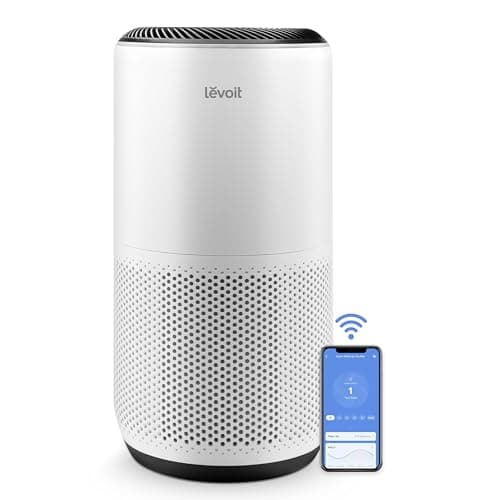 Levoit Core 400SLiving rooms and open-plan spaces | Best overall | 8.6 | $189.97 - View on Amazon |
| 2 | 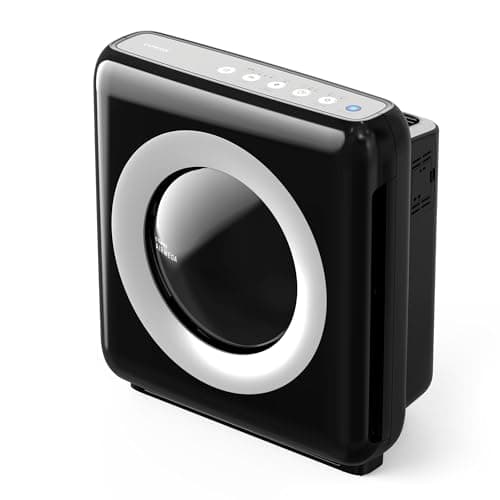 Coway Airmega AP-1512HH MightyRunning continuously in a medium room | Best to run continuously | 8.7 | $154.98 - View on Amazon |
| 3 |  Levoit Core 300SBedrooms up to about 220 sq ft | Best for a bedroom | 8.8 | Check price on Amazon |
| 4 | Winix 5500-2Smoke, cooking smells and pet odors | Best for smoke and odor | 8.4 | Check price on Amazon |
| 5 | 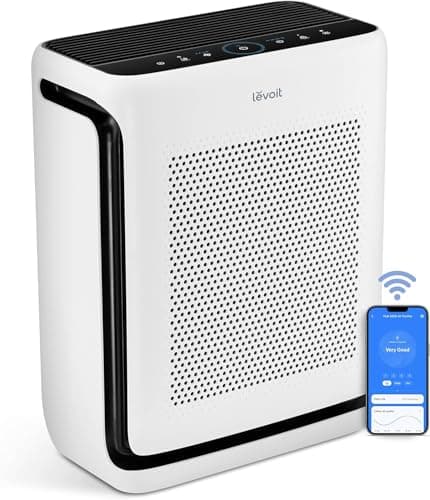 Levoit Vital 200SHomes with shedding pets | Best for pet households | 8.0 | $169.99 - View on Amazon |
#1 - Best overall
Levoit Core 400S
Living rooms and open-plan spaces
The one to buy if you want a purifier that genuinely covers a living room, and one of the few spec sheets in this bracket that publishes coverage at a useful air-change rate rather than only the flattering one.
#ad Price as of October 18, 2026, from Amazon. Prices change. How we make money.
Published specifications
| Specification | Value | Source |
|---|---|---|
| CADR | 231 CFM | Levoit published specification |
| Coverage | 358 sq ft at 4.8 air changes/hr (1,718 sq ft at 1 ACH) | Levoit published specification |
| Rated power | 38 W | Levoit published specification |
| Noise | 22-52 dB | Levoit published specification |
| Filtration | 3-stage: pre-filter, HEPA, activated carbon | Levoit published specification |
| Dimensions | 10.8 x 10.8 x 20.5 in, 11 lb | Levoit published specification |
What it costs to run
About $25-30 a year in electricity at 12 hours a day, before filters.
38 W / 1000 x 12 hours x 365 days = 166.4 kWh. At 18.34 cents/kWh that is $30.52 a year at rated power - and the unit only draws its full 38 W on the top fan speed, so a mid setting lands nearer $25. Add the replacement filter, which you should price before you buy rather than after.
What is good about it
- Levoit publishes coverage at both 1 ACH and 4.8 ACH, which is unusually straight - most brands quote only the flattering 1 ACH number
- 38 W is low for this CADR, which is what keeps the running cost down
- 22 dB on its lowest setting is quiet enough to sleep beside
- Carbon, pet-allergy and smoke-specific replacement filters are sold for the same body
What is not
- We could not find a published filter replacement interval in Levoit's specification, so we are not quoting one
- The 1,718 sq ft headline is a single air change per hour, which is not a useful rate for allergies
Who should skip this
Skip this if your room is under 200 sq ft. The Core 300S covers that at lower power and lower cost, and the extra CADR buys you nothing in a small bedroom.
How it scored
- Clean air per watt9.0
- Honest coverage claim9.5
- Quiet operation8.5
- Filter economics7.5
Overall 8.6 / 10. This is our editorial score from published specifications and computed running cost. It is not a test result, and it is deliberately not marked up as a rating in this page’s structured data.
#2 - Best to run continuously
Coway Airmega AP-1512HH Mighty
Running continuously in a medium room
The most efficient unit here at low speed - 3.7 W on speed one - which matters enormously if you leave a purifier running all day and almost not at all if you do not.
#ad Price as of October 18, 2026, from Amazon. Prices change. How we make money.
Published specifications
| Specification | Value | Source |
|---|---|---|
| CADR (smoke) | 233 CFM | Coway published specification |
| CADR (dust) | 246 CFM | Coway published specification |
| CADR (pollen) | 240 CFM | Coway published specification |
| Coverage | 361 sq ft at 4.8 air changes/hr (1,748 sq ft at 1 ACH) | Coway published specification |
| Power draw by speed | 0.3 W standby / 3.7 W speed 1 / 8.7 W speed 2 / 75.3 W speed 3 | Coway published specification |
| Filtration | Pre-filter, odor filter, Green True HEPA, bipolar device | Coway published specification |
What it costs to run
About $6 a year running 24/7 on speed one, or $121 a year running 24/7 on speed three.
Speed 1: 3.7 W / 1000 x 24 x 365 = 32.4 kWh = $5.94 a year. Speed 3: 75.3 W / 1000 x 24 x 365 = 659.6 kWh = $120.97 a year. That twenty-fold spread is the most important number on this page, and it is why we chase per-speed figures instead of accepting a single rated wattage.
What is good about it
- Coway publishes power draw per fan speed, which almost nobody does and which is the only way to compute a real running cost
- 3.7 W on speed one is remarkable - cheaper to run continuously than most nightlights
- Coverage published at 1, 2 and 4.8 air changes per hour, so you can size it honestly
What is not
- 75.3 W on speed three is the highest draw here; how the auto mode behaves decides your bill
- The bipolar device is a stage we would rather do without; check it can be disabled
Who should skip this
Skip this if you only run a purifier for an hour or two at a time. Its whole advantage is low-speed efficiency over long hours, and short bursts on high speed give that straight back.
How it scored
- Clean air per watt9.5
- Honest coverage claim9.5
- Quiet operation8.0
- Filter economics7.5
Overall 8.7 / 10. This is our editorial score from published specifications and computed running cost. It is not a test result, and it is deliberately not marked up as a rating in this page’s structured data.
#3 - Best for a bedroom
Levoit Core 300S
Bedrooms up to about 220 sq ft
The right size for an actual bedroom. 23 W and 22 dB on low means you can run it all night without noticing it on the bill or on the pillow.
#ad We do not hold a current price for this product, so we do not show one. How we make money.
Published specifications
| Specification | Value | Source |
|---|---|---|
| CADR | 141 CFM (240 m3/h) | Levoit published specification |
| Coverage | 219 sq ft at 4.8 air changes/hr (1,051 sq ft at 1 ACH) | Levoit published specification |
| Rated power | 23 W | Levoit published specification |
| Noise | 22-50 dB | Levoit published specification |
| Filtration | 3-stage | Levoit published specification |
| Dimensions | 8.7 x 8.7 x 14.2 in, 5.95 lb | Levoit published specification |
What it costs to run
About $15-18 a year in electricity at 12 hours a day.
23 W / 1000 x 12 hours x 365 days = 100.7 kWh. At 18.34 cents/kWh that is $18.47 a year at rated power, and less on the lower fan speeds you would actually use overnight.
What is good about it
- 141 CFM clears AHAM's two-thirds rule for any room up to 211 sq ft, which covers most bedrooms
- 23 W is the lowest draw of anything we list with this much CADR
- Small enough to sit on a nightstand rather than take a corner of the floor
What is not
- Not enough for a living room - the useful 4.8 ACH figure is 219 sq ft, not the 1,051 sq ft headline
- No published filter replacement interval in the specification we could find
Who should skip this
Skip this if the room is over about 220 sq ft, or if you are trying to cover an open-plan downstairs. It will run flat out and still lose.
How it scored
- Clean air per watt9.5
- Honest coverage claim9.5
- Quiet operation9.0
- Filter economics7.5
Overall 8.8 / 10. This is our editorial score from published specifications and computed running cost. It is not a test result, and it is deliberately not marked up as a rating in this page’s structured data.
#4 - Best for smoke and odor
Winix 5500-2
Smoke, cooking smells and pet odors
The one with a genuine granular carbon stage rather than a carbon-dusted sheet, which is why it belongs on a smoke and odor list and why it costs more to run.
#ad We do not hold a current price for this product, so we do not show one. How we make money.
Published specifications
| Specification | Value | Source |
|---|---|---|
| CADR (smoke) | 232 CFM | AHAM-verified figure published by Winix |
| CADR (dust) | 243 CFM | AHAM-verified figure published by Winix |
| CADR (pollen) | 246 CFM | AHAM-verified figure published by Winix |
| Coverage | 360 sq ft | Winix published specification |
| Rated power | 70 W | Winix published specification |
| Filtration | 4-stage: washable pre-filter, activated carbon, True HEPA, PlasmaWave | Winix published specification |
| Certification | Energy Star, CARB certified | Winix published specification |
What it costs to run
About $56 a year in electricity at 12 hours a day, before filters.
70 W / 1000 x 12 hours x 365 days = 306.6 kWh. At 18.34 cents/kWh that is $56.23 a year. Over three years that is roughly $95 more than the Levoit Core 400S at the same hours - typically more than the price gap between the two units at purchase.
What is good about it
- AHAM-verified CADR, which means the figure was measured to the AC-1 standard rather than asserted by marketing
- A real granular carbon filter, which is what actually adsorbs gases and odors
- The washable pre-filter slows down how fast the expensive filter loads up
What is not
- 70 W is roughly double the Levoit Core 400S for a similar CADR, and you pay that difference every year
- PlasmaWave is an ionizing stage; it can be switched off, and we would switch it off
Who should skip this
Skip this if odor is not your problem. Buying for dust and pollen alone means paying a 70 W electricity premium for a carbon stage you will not use.
How it scored
- Clean air per watt6.5
- Honest coverage claim9.0
- Odor and gas removal9.5
- Filter economics8.0
Overall 8.4 / 10. This is our editorial score from published specifications and computed running cost. It is not a test result, and it is deliberately not marked up as a rating in this page’s structured data.
#5 - Best for pet households
Levoit Vital 200S
Homes with shedding pets
The highest CADR we carry, built around a washable pre-filter and a wide intake - the right shape for a house with animals in it, because hair loads a filter far faster than dust does.
#ad Price as of October 18, 2026, from Amazon. Prices change. How we make money.
Published specifications
| Specification | Value | Source |
|---|---|---|
| CADR | 250 CFM | Levoit published specification |
| Coverage | 388 sq ft at 4.8 air changes/hr (1,862 sq ft at 1 ACH) | Levoit published specification |
| Rated power | 50 W | Levoit published specification |
| Noise | 23-54 dB | Levoit published specification |
| Filtration | 3-stage: washable pre-filter, HEPA, activated carbon. Pet allergy, toxin absorber and smoke remover carbon filters sold for the same body | Levoit published specification |
| Dimensions | 15.6 x 8.5 x 19.8 in | Levoit published specification |
What it costs to run
About $40 a year in electricity at 12 hours a day, before filters.
50 W / 1000 x 12 hours x 365 days = 219 kWh. At 18.34 cents/kWh that is $40.16 a year at rated power, and less on the lower fan speeds. That is roughly $10 a year more than the Core 400S for 19 CFM more CADR - worth it in a house with animals, hard to justify without them.
What is good about it
- 250 CFM is the highest CADR of anything we carry, and it covers about 375 sq ft under AHAM's two-thirds rule
- The washable pre-filter is the part that matters with pets - hair is what kills HEPA filters early
- Levoit publishes coverage at both 1 ACH and 4.8 ACH, and the 388 sq ft figure lines up closely with the AHAM arithmetic
- Four different carbon filters fit the same chassis, so the unit adapts to pets, smoke or off-gassing without replacing the body
What is not
- 50 W for 250 CFM is a worse clean-air-per-watt ratio than the Core 400S manages at 38 W for 231 CFM
- We could not find a published filter replacement interval for this model, so we are not quoting one
- Levoit does not publish power draw per fan speed, so continuous-running cost cannot be computed precisely
- The pet-specific carbon filter is a separate purchase and is not always in stock - check it is available before buying the body for that reason
Who should skip this
Skip this if you have no animals and no odor problem. Without pets you are paying for a wide pre-filter and a carbon option you will not use, and the Core 400S delivers comparable clean air on 12 W less.
How it scored
- Pre-filter design for hair9.0
- Clean air per watt7.0
- Honest coverage claim9.0
- Filter economics8.0
Overall 8.0 / 10. This is our editorial score from published specifications and computed running cost. It is not a test result, and it is deliberately not marked up as a rating in this page’s structured data.
How we ranked these
We have not tested these units. Nobody here owns one. What we did was compile each manufacturer’s published specifications, check the coverage claims against AHAM’s room-sizing rule, and compute what each one costs to run for a year at the current US average electricity price. Every figure on this page is attributed to whoever published it, and the arithmetic is shown so you can redo it.
How we rank these sets out the full method, including what would change a ranking.
Questions people ask
+−What is the best air purifier overall?
There is not one, and we would distrust any page that names one without asking about your room. The best unit for a 90 sq ft bedroom is the wrong unit for an open-plan living room. Size on smoke CADR against your actual room first - the arithmetic for big spaces is in best air purifiers for large rooms - then choose within that size band on the problem you have.
+−What CADR do I need?
AHAM’s guidance is a smoke CADR of roughly two-thirds the room’s square footage; their worked example is 132 CFM for a 200 sq ft room. Add margin for a high ceiling, because the rule assumes a standard one.
+−Are expensive air purifiers better?
Not reliably. Price tracks features, smart apps and brand more than it tracks CADR per watt. We take one unit apart on exactly those numbers in our Levoit Core 400S review. The two figures that predict how a unit performs and what it costs you - CADR and rated power - are published, and comparing them directly is more useful than comparing prices.
+−Do I need an air purifier in every room?
One per closed-door room you genuinely care about. Air does not move freely between closed rooms, so a unit treats the room it is in. Most households get most of the benefit from a single correctly sized unit in the bedroom - or, in a house with animals, a single Vital 200S where the shedding happens.
+−Should I leave an air purifier running all the time?
Continuously at a low speed usually beats short bursts on high, because particle concentration recovers between runs. Whether that is affordable depends on the unit’s power draw at low speed - which is why we chase per-speed wattage rather than accepting a single rated figure. Where a certified clean-air-per-watt figure exists, it settles the question outright - Levoit vs Blueair.
+−Do air purifiers help with mold or humidity?
No to humidity - a purifier does not add or remove moisture. For mold it can capture some airborne spores in the room it is in, but it does not touch the growth or the water feeding it, so it does not fix the problem. For the broader question of whether any of these is worth the outlay, see are air purifiers worth it.