Roundup
Best Air Purifiers for Allergies
Sizing decides whether a purifier does anything at all. That arithmetic goes above the products here, not below them.
By Scooter M. · Published · Last updated
How this page is funded: the buy links below are affiliate links. If you buy through one, we earn a commission at no extra cost to you. It does not change the order of the picks or what we say about them. Full disclosure.
Two things decide whether a purifier helps with allergies, and neither is the brand. They go here, above the picks, because a correctly sized budget unit beats an undersized expensive one every time.
Is an air purifier the right fix for this?
For airborne allergens - pollen tracked in from outside, dust, pet dander - yes, within the room it is in. For two very common indoor allergy triggers, no, or not on its own:
- Dust mites. They live in bedding and upholstery, and their allergen is heavy - it settles within minutes of being disturbed rather than staying airborne. A purifier catches very little of it. The lever is humidity and bedding, not filtration - dust mites in the bedroom.
- Mold. A purifier removes spores from the air. It does nothing about the growth producing them, because that is a moisture problem - will an air purifier fix mold.
And if symptoms are worse in winter with static and cracked lips, the problem may be dryness rather than allergens entirely - see which device do I need.
What size you actually need
AHAM’s guidance is to choose an air cleaner with a smoke CADR of roughly two-thirds the room’s area, and their published example is that a 200 sq ft room requires a smoke CADR of at least 132.
| Room area | Minimum smoke CADR | What that means here |
|---|---|---|
| 100 sq ft | 67 CFM | Any unit on this page is sufficient |
| 150 sq ft | 100 CFM | The Levoit Core 300S at 141 CFM covers it comfortably |
| 200 sq ft | 132 CFM (AHAM's example) | Core 300S at 141 CFM just clears it |
| 250 sq ft | 167 CFM | Step up to the Core 400S, Coway or Winix |
| 350 sq ft | 233 CFM | Coway at 233 CFM exactly; the others are marginal |
| 500 sq ft | 333 CFM | No single unit here. Two units, or close a door. |
Add 25% for a 10-foot ceiling, and 50% for a vaulted one - CADR is about volume, and area only stands in for volume when the height is standard. Full arithmetic at CADR explained.
What actually matters in the specification
- Smoke CADR, because it is the hardest of the three particle tests and the one to size against.
- Power draw, ideally per fan speed. Allergy purifiers run for long hours, so this is what you actually pay. Coway publishes 3.7 W on speed one and 75.3 W on speed three - a twentyfold spread on the same unit.
- Noise at the speed you will actually use. A unit too loud to sleep beside gets run on low, and its effective CADR is the low-speed figure, not the rated one.
- Filter cost and availability, over three years rather than at purchase.
The running cost nobody publishes
At the US average residential rate of 18.34 cents/kWh, running 12 hours a day for a year:
- Levoit Core 300S at 23 W: 100.7 kWh = $18.47
- Levoit Core 400S at 38 W: 166.4 kWh = $30.52
- Winix 5500-2 at 70 W: 306.6 kWh = $56.23
- Coway on speed one at 3.7 W, 24/7: 32.4 kWh = $5.94
Over three years the gap between the cheapest and most expensive of those to run is larger than the price difference between the units. That is the calculation this site exists to do.
This page is about the environment - humidity, particles, ventilation - and what changes it. It is not medical advice and we hold no medical qualification. If symptoms are persistent, severe or getting worse, that is a question for a clinician rather than a purchase.
When to buy nothing at all
- The trigger is dust mites in bedding. Filtration barely touches it; bedding covers and humidity do.
- There is visible mold or damp. Fix the moisture; a purifier is downstream of it.
- You have a forced-air system with a filter you have not changed in a year. That is already a whole-house air cleaner and it costs a few dollars to restore.
- The room is 500 sq ft and open plan, and you were going to buy one mid-range unit. It will not be enough, and knowing that beforehand is worth more than the unit.
Quick picks
Ranked on published specifications and computed running cost. Tap any row for the full write-up, including who should skip it.
| # | Product | Best for | Score | Price |
|---|---|---|---|---|
| 1 | 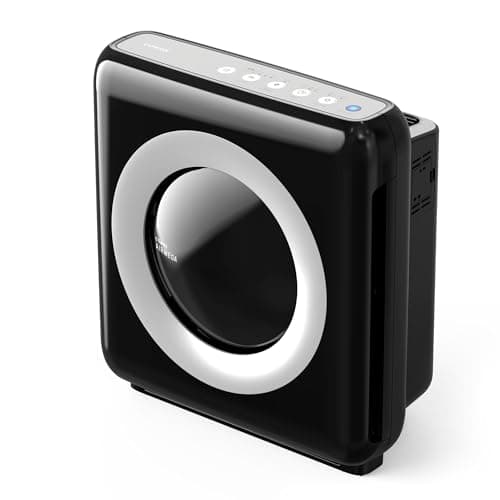 Coway Airmega AP-1512HH MightyRunning continuously in a medium room Coway Airmega AP-1512HH MightyRunning continuously in a medium room | Continuous running | 8.7 | $154.98 - View on Amazon |
| 2 | 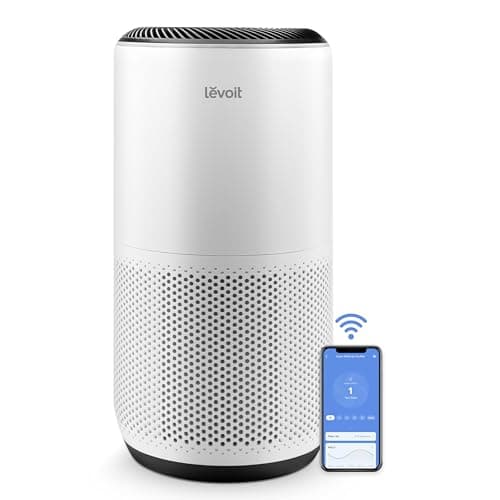 Levoit Core 400SLiving rooms and open-plan spaces Levoit Core 400SLiving rooms and open-plan spaces | Living rooms | 8.6 | $189.97 - View on Amazon |
| 3 |  Levoit Core 300SBedrooms up to about 220 sq ft Levoit Core 300SBedrooms up to about 220 sq ft | Bedrooms | 8.8 | Check price on Amazon |
| 4 | Winix 5500-2Smoke, cooking smells and pet odors | Allergies plus odors | 8.4 | Check price on Amazon |
#1 - Continuous running
Coway Airmega AP-1512HH Mighty
Running continuously in a medium room
The most efficient unit here at low speed - 3.7 W on speed one - which matters enormously if you leave a purifier running all day and almost not at all if you do not.
#ad Price as of October 18, 2026, from Amazon. Prices change. How we make money.
Published specifications
| Specification | Value | Source |
|---|---|---|
| CADR (smoke) | 233 CFM | Coway published specification |
| CADR (dust) | 246 CFM | Coway published specification |
| CADR (pollen) | 240 CFM | Coway published specification |
| Coverage | 361 sq ft at 4.8 air changes/hr (1,748 sq ft at 1 ACH) | Coway published specification |
| Power draw by speed | 0.3 W standby / 3.7 W speed 1 / 8.7 W speed 2 / 75.3 W speed 3 | Coway published specification |
| Filtration | Pre-filter, odor filter, Green True HEPA, bipolar device | Coway published specification |
What it costs to run
About $6 a year running 24/7 on speed one, or $121 a year running 24/7 on speed three.
Speed 1: 3.7 W / 1000 x 24 x 365 = 32.4 kWh = $5.94 a year. Speed 3: 75.3 W / 1000 x 24 x 365 = 659.6 kWh = $120.97 a year. That twenty-fold spread is the most important number on this page, and it is why we chase per-speed figures instead of accepting a single rated wattage.
What is good about it
- Coway publishes power draw per fan speed, which almost nobody does and which is the only way to compute a real running cost
- 3.7 W on speed one is remarkable - cheaper to run continuously than most nightlights
- Coverage published at 1, 2 and 4.8 air changes per hour, so you can size it honestly
What is not
- 75.3 W on speed three is the highest draw here; how the auto mode behaves decides your bill
- The bipolar device is a stage we would rather do without; check it can be disabled
Who should skip this
Skip this if you only run a purifier for an hour or two at a time. Its whole advantage is low-speed efficiency over long hours, and short bursts on high speed give that straight back.
How it scored
- Clean air per watt9.5
- Honest coverage claim9.5
- Quiet operation8.0
- Filter economics7.5
Overall 8.7 / 10. This is our editorial score from published specifications and computed running cost. It is not a test result, and it is deliberately not marked up as a rating in this page’s structured data.
#2 - Living rooms
Levoit Core 400S
Living rooms and open-plan spaces
The one to buy if you want a purifier that genuinely covers a living room, and one of the few spec sheets in this bracket that publishes coverage at a useful air-change rate rather than only the flattering one.
#ad Price as of October 18, 2026, from Amazon. Prices change. How we make money.
Published specifications
| Specification | Value | Source |
|---|---|---|
| CADR | 231 CFM | Levoit published specification |
| Coverage | 358 sq ft at 4.8 air changes/hr (1,718 sq ft at 1 ACH) | Levoit published specification |
| Rated power | 38 W | Levoit published specification |
| Noise | 22-52 dB | Levoit published specification |
| Filtration | 3-stage: pre-filter, HEPA, activated carbon | Levoit published specification |
| Dimensions | 10.8 x 10.8 x 20.5 in, 11 lb | Levoit published specification |
What it costs to run
About $25-30 a year in electricity at 12 hours a day, before filters.
38 W / 1000 x 12 hours x 365 days = 166.4 kWh. At 18.34 cents/kWh that is $30.52 a year at rated power - and the unit only draws its full 38 W on the top fan speed, so a mid setting lands nearer $25. Add the replacement filter, which you should price before you buy rather than after.
What is good about it
- Levoit publishes coverage at both 1 ACH and 4.8 ACH, which is unusually straight - most brands quote only the flattering 1 ACH number
- 38 W is low for this CADR, which is what keeps the running cost down
- 22 dB on its lowest setting is quiet enough to sleep beside
- Carbon, pet-allergy and smoke-specific replacement filters are sold for the same body
What is not
- We could not find a published filter replacement interval in Levoit's specification, so we are not quoting one
- The 1,718 sq ft headline is a single air change per hour, which is not a useful rate for allergies
Who should skip this
Skip this if your room is under 200 sq ft. The Core 300S covers that at lower power and lower cost, and the extra CADR buys you nothing in a small bedroom.
How it scored
- Clean air per watt9.0
- Honest coverage claim9.5
- Quiet operation8.5
- Filter economics7.5
Overall 8.6 / 10. This is our editorial score from published specifications and computed running cost. It is not a test result, and it is deliberately not marked up as a rating in this page’s structured data.
#3 - Bedrooms
Levoit Core 300S
Bedrooms up to about 220 sq ft
The right size for an actual bedroom. 23 W and 22 dB on low means you can run it all night without noticing it on the bill or on the pillow.
#ad We do not hold a current price for this product, so we do not show one. How we make money.
Published specifications
| Specification | Value | Source |
|---|---|---|
| CADR | 141 CFM (240 m3/h) | Levoit published specification |
| Coverage | 219 sq ft at 4.8 air changes/hr (1,051 sq ft at 1 ACH) | Levoit published specification |
| Rated power | 23 W | Levoit published specification |
| Noise | 22-50 dB | Levoit published specification |
| Filtration | 3-stage | Levoit published specification |
| Dimensions | 8.7 x 8.7 x 14.2 in, 5.95 lb | Levoit published specification |
What it costs to run
About $15-18 a year in electricity at 12 hours a day.
23 W / 1000 x 12 hours x 365 days = 100.7 kWh. At 18.34 cents/kWh that is $18.47 a year at rated power, and less on the lower fan speeds you would actually use overnight.
What is good about it
- 141 CFM clears AHAM's two-thirds rule for any room up to 211 sq ft, which covers most bedrooms
- 23 W is the lowest draw of anything we list with this much CADR
- Small enough to sit on a nightstand rather than take a corner of the floor
What is not
- Not enough for a living room - the useful 4.8 ACH figure is 219 sq ft, not the 1,051 sq ft headline
- No published filter replacement interval in the specification we could find
Who should skip this
Skip this if the room is over about 220 sq ft, or if you are trying to cover an open-plan downstairs. It will run flat out and still lose.
How it scored
- Clean air per watt9.5
- Honest coverage claim9.5
- Quiet operation9.0
- Filter economics7.5
Overall 8.8 / 10. This is our editorial score from published specifications and computed running cost. It is not a test result, and it is deliberately not marked up as a rating in this page’s structured data.
#4 - Allergies plus odors
Winix 5500-2
Smoke, cooking smells and pet odors
The one with a genuine granular carbon stage rather than a carbon-dusted sheet, which is why it belongs on a smoke and odor list and why it costs more to run.
#ad We do not hold a current price for this product, so we do not show one. How we make money.
Published specifications
| Specification | Value | Source |
|---|---|---|
| CADR (smoke) | 232 CFM | AHAM-verified figure published by Winix |
| CADR (dust) | 243 CFM | AHAM-verified figure published by Winix |
| CADR (pollen) | 246 CFM | AHAM-verified figure published by Winix |
| Coverage | 360 sq ft | Winix published specification |
| Rated power | 70 W | Winix published specification |
| Filtration | 4-stage: washable pre-filter, activated carbon, True HEPA, PlasmaWave | Winix published specification |
| Certification | Energy Star, CARB certified | Winix published specification |
What it costs to run
About $56 a year in electricity at 12 hours a day, before filters.
70 W / 1000 x 12 hours x 365 days = 306.6 kWh. At 18.34 cents/kWh that is $56.23 a year. Over three years that is roughly $95 more than the Levoit Core 400S at the same hours - typically more than the price gap between the two units at purchase.
What is good about it
- AHAM-verified CADR, which means the figure was measured to the AC-1 standard rather than asserted by marketing
- A real granular carbon filter, which is what actually adsorbs gases and odors
- The washable pre-filter slows down how fast the expensive filter loads up
What is not
- 70 W is roughly double the Levoit Core 400S for a similar CADR, and you pay that difference every year
- PlasmaWave is an ionizing stage; it can be switched off, and we would switch it off
Who should skip this
Skip this if odor is not your problem. Buying for dust and pollen alone means paying a 70 W electricity premium for a carbon stage you will not use.
How it scored
- Clean air per watt6.5
- Honest coverage claim9.0
- Odor and gas removal9.5
- Filter economics8.0
Overall 8.4 / 10. This is our editorial score from published specifications and computed running cost. It is not a test result, and it is deliberately not marked up as a rating in this page’s structured data.
How we ranked these
We have not tested these units. Nobody here owns one. What we did was compile each manufacturer’s published specifications, check the coverage claims against AHAM’s room-sizing rule, and compute what each one costs to run for a year at the current US average electricity price. Every figure on this page is attributed to whoever published it, and the arithmetic is shown so you can redo it.
How we rank these sets out the full method, including what would change a ranking.
Questions people ask
+−Do air purifiers help with allergies?
For airborne allergens in the room the unit is in, and when correctly sized to that room, yes. For dust mite allergen - which lives in bedding and settles quickly - much less, because the allergen spends little time airborne. Matching the device to the specific trigger matters more than the purchase price.
+−Should the purifier run all night in a bedroom?
That is the use case it suits best - a closed room, long hours, and the intake somewhere clear rather than against a wall. Check the low-speed noise figure before buying: 22 dB is genuinely unobtrusive and many units are considerably louder. Quiet matters most where the source never switches off, which is the argument in best air purifiers for cat allergies.
+−Where should I put an air purifier?
In the room you spend the most time in, with clearance around the intake and outlet, and not shoved into a corner or behind furniture. A unit with restricted airflow does not deliver its rated CADR no matter what the box says.
+−How often do air purifier filters need changing?
On the manufacturer’s schedule, and sooner in a house with pets or heavy dust. Several manufacturers do not publish an interval at all, which we note in the write-ups where we could not find one rather than inventing a figure. We compare the published schedules, and count the parts each unit needs per year, in washable vs replaceable filters.
+−Are expensive air purifiers better?
Not reliably. What you should compare is smoke CADR against your room area, power draw at the speed you will run it, and three-year filter cost. Some expensive units score badly on all three, and some inexpensive ones score well. We work all three through for one unit in our Levoit Core 400S review.
+−Do I need one in every room?
Air does not move freely between closed rooms, so a unit treats the room it is in. Most households are best served by one correctly sized unit in the bedroom rather than several undersized ones spread around. If you are still deciding which unit, start at best air purifiers.