Comparison
Mold Test Kits vs Air Quality Monitors
Two devices sold for the same worry, neither of which answers it. The measurement that does change your decisions costs less than either and is not about mold at all.
By Scooter M. · Published · Last updated
How this page is funded: the buy links below are affiliate links. If you buy through one, we earn a commission at no extra cost to you. It does not change the order of the picks or what we say about them. Full disclosure.
The short answer
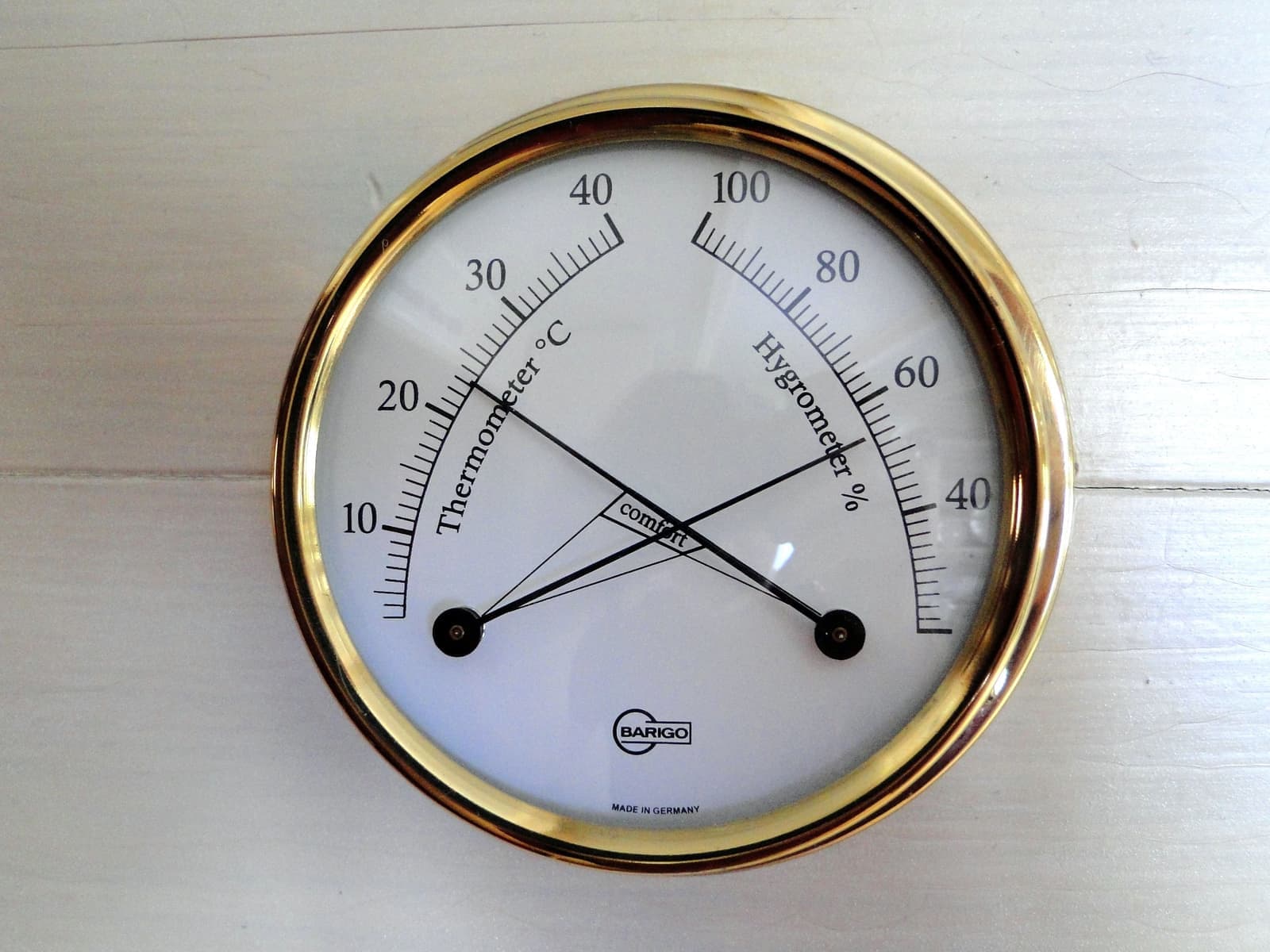
Buy a hygrometer, not a mold test. The EPA’s position is that in most cases, if visible mold growth is present, sampling is unnecessary - and that there are currently no EPA regulations or standards for airborne mold contaminants, so a number from a test cannot be compared against a limit. A humidity reading, by contrast, maps directly onto a published recommendation and onto an action you can take today.
What a consumer mold test kit actually does
The common household version is a settle plate: a shallow dish of growth medium you leave open in a room for a period, close, and incubate. Something grows, because mold spores are present in essentially all indoor and outdoor air. Some kits offer to send the plate to a laboratory for identification, usually at additional cost.
The problem is not that the plate fails to grow anything. It is that growing something was never in doubt, and the result has no reference point. The EPA states plainly that there are currently no EPA regulations or standards for airborne mold contaminants, and that threshold limit values for airborne concentrations of mold have not been established. Without a limit, a count is a number without a verdict attached.
And what an air quality monitor does
A consumer air quality monitor counts particles by measuring how light scatters off them. It does not identify what those particles are. Mold spores are particles, so an elevated reading is not inconsistent with mold - and it is equally consistent with cooking, vacuuming, a candle, or somebody having walked across a carpet.
No consumer PM2.5 device on the market resolves particle identity, and any product page implying that a rising number indicates mold is overselling what the sensor can do. What these monitors are genuinely good at is set out in best air quality monitors, and it is a real capability - just not this one.
| Mold test kit | Air quality monitor | Hygrometer | |
|---|---|---|---|
| Answers “do I have mold?” | No - something always grows, and there is no standard to compare it against | No - it counts particles and cannot identify them | No - but it tells you whether conditions support growth |
| Maps to a published recommendation | No. The EPA states there are no federal standards for airborne mold | Partly - the AQI covers particulate generally, not mold | Yes. The EPA recommends below 60%, ideally 30-50% |
| Changes what you do next | Rarely. A positive result usually confirms what the smell already told you | Sometimes - useful during smoke, less so for damp | Almost always. It tells you whether to ventilate, dehumidify, or neither |
| Cost bracket | Low for the kit; laboratory analysis is extra and open-ended | The most expensive of the three | The cheapest device on this site |
The measurement that does change your decisions
Mold is a moisture problem before it is an air problem. The EPA’s guidance is to keep indoor humidity below 60 percent and ideally between 30 and 50 percent relative humidity, and it notes that if wet or damp materials or areas are dried 24-48 hours after a leak or spill happens, in most cases mold will not grow.
Both of those are actionable in a way a spore count never is. A hygrometer reading of 68% in a basement does not tell you whether mold is present - it tells you that the conditions supporting it are, that you are outside the recommended band, and precisely what to change. That is worth more than a laboratory identifying a genus you cannot act on differently.
When testing is genuinely the right call
We are not saying nobody should ever sample. There are situations where it is reasonable, and in each of them the EPA’s framing - professionals with specific experience in sampling protocols and interpretation - is the relevant guide rather than a supermarket kit:
- A dispute that will be adjudicated by somebody else - a landlord, an insurer, a sale. Here you need documentation produced to a defensible method.
- You suspect hidden growth you cannot find - a persistent smell with no visible source, after you have already checked the obvious places.
- Post-remediation verification - the EPA notes surface sampling may be useful to determine whether an area has been adequately cleaned or remediated.
- A clinician has asked for it as part of managing a specific diagnosed condition. That is their call to make, not ours.
This page is about the environment - humidity, particles, ventilation - and what changes it. It is not medical advice and we hold no medical qualification. If symptoms are persistent, severe or getting worse, that is a question for a clinician rather than a purchase.
What to do instead, in order
- Put a hygrometer in the room and one somewhere you consider normal. Compare them over a few days.
- Use your nose as a detector, not a locator. A musty smell is a reliable signal that moisture is present somewhere and a poor guide to where.
- Look where water arrives - under sinks, behind appliances, at the base of external walls, around window reveals, in the roof space after rain.
- Fix the water, then dry fast, inside that 24-48 hour window where you can.
- Hold the humidity down and only then consider whether filtration adds anything - which, for mold specifically, it mostly does not: will an air purifier fix mold.
Which hygrometer, then
For this job, either kind works and the choice is about whether you need history. A plain digital hygrometer gives you the number now, costs very little, and is cheap enough to put one in each suspect room - which is the comparison that actually localizes a damp problem. A logging Bluetooth sensor is worth the premium when the room reads fine every time you check it and you suspect something happens overnight, because a spot reading cannot show you a curve. Both are compared in best hygrometers.
What we would actually do
Skip the test kit. Buy two cheap hygrometers, put one in the room that worries you and one in a room that does not, and read them for a week. If the suspect room sits above 60%, you have your answer without a laboratory, and the fix is moisture control rather than filtration. If you need a defensible result for somebody else - an insurer, a landlord, a buyer - that is the point at which to engage a professional who samples to a recognized protocol, which is what the EPA recommends anyway.
What we would buy for this
Chosen from the same registry as our roundups, on published specifications and computed running cost.
ThermoPro TP49 Hygrometer
Anyone about to buy a humidifier or a dehumidifier
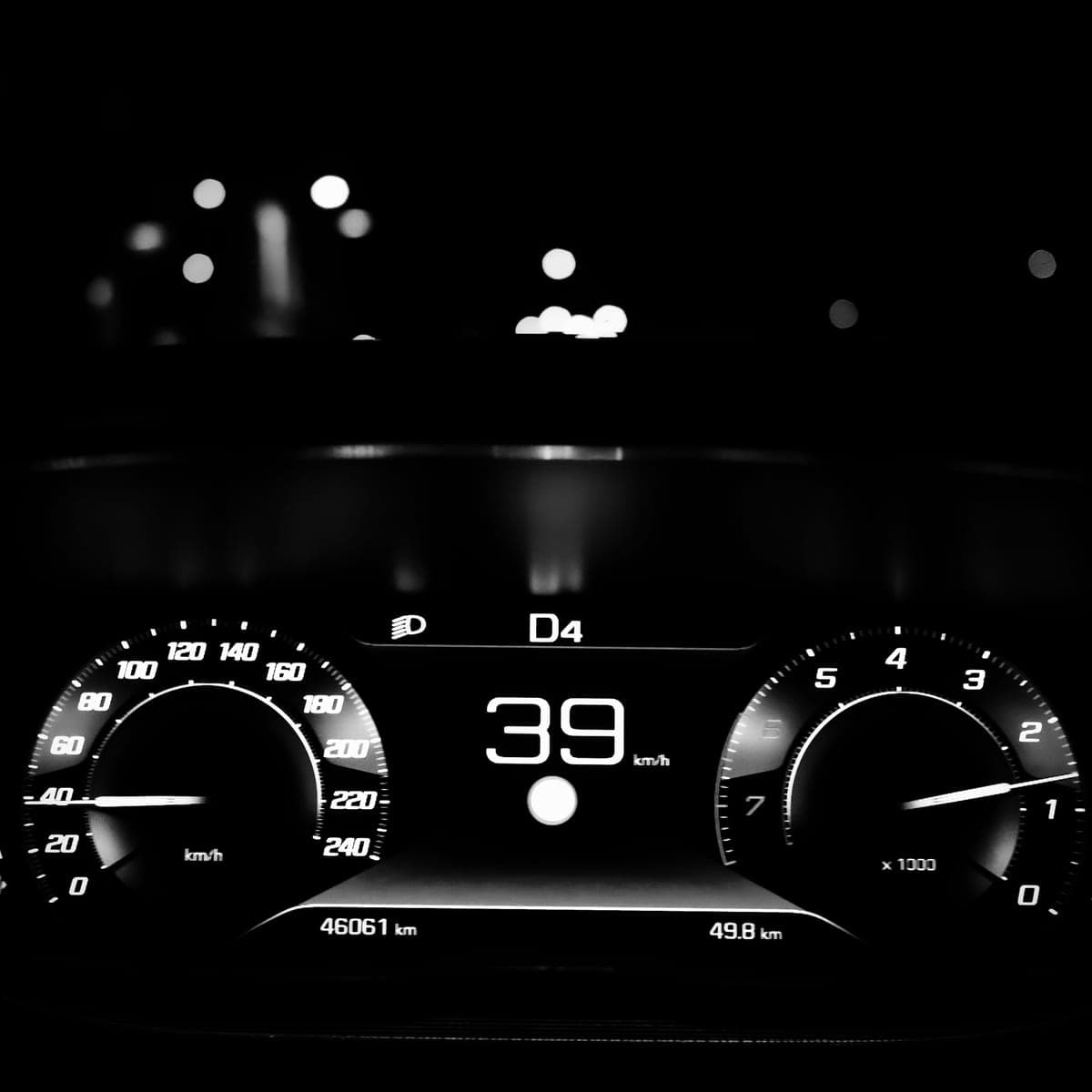
An inexpensive digital hygrometer is the highest-value purchase on this entire site, because it is the one that tells you whether to buy anything else.
#ad We do not hold a current price for this product, so we do not show one. How we make money.
Published specifications
| Specification | Value | Source |
|---|---|---|
| Function | Digital temperature and relative humidity readout with a comfort indicator | ThermoPro published specification |
What is good about it
- Cheap enough to buy three and put one in the bedroom, one in the basement and one in the living room, which is what you actually want
- Gives you the reading that decides between a humidifier and a dehumidifier - a decision people routinely get backwards
What is not
- Consumer hygrometers are typically accurate to within a few percentage points, which is fine for the 30-50% question and not fine for anything precise
- No logging, so you see now rather than overnight
Who should skip this
Skip this only if you already own a hygrometer. There is no household we would tell not to measure.
How it scored
- Value for the decision it informs10.0
- Accuracy for the 30-50% question8.0
- Logging and history2.0
Overall 9.0 / 10. This is our editorial score from published specifications and computed running cost. It is not a test result, and it is deliberately not marked up as a rating in this page’s structured data.
Govee H5075 Bluetooth Hygrometer
Diagnosing a problem that changes overnight
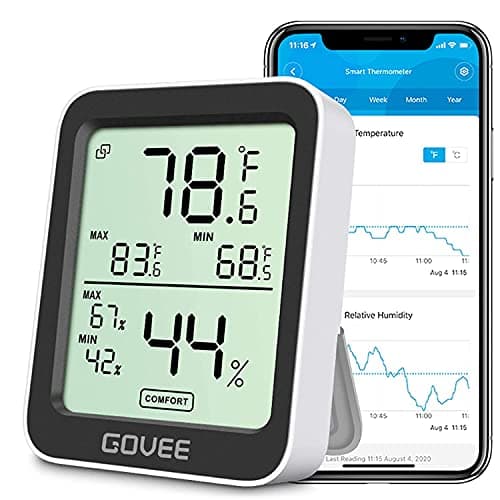
The one that logs. If your problem is that the house is dry at night but fine during the day, a hygrometer you have to walk over and read will never tell you that.
#ad Price as of October 18, 2026, from Amazon. Prices change. How we make money.
Published specifications
| Specification | Value | Source |
|---|---|---|
| Function | Bluetooth temperature and humidity sensor with app-based logging and data export | Govee published specification |
What is good about it
- Logging is the feature. Overnight humidity swings are invisible to a spot reading, and they explain most morning symptoms
- Data export means you can check whether the humidifier actually changed anything, rather than assuming
What is not
- Bluetooth range is room-scale; a basement sensor will not reach a phone upstairs
- Requires an app and an account, which is a genuine cost for some people
Who should skip this
Skip this if you just want a number on a wall. The logging is the whole premium, and it is wasted if you will not look at it.
How it scored
- Logging and history9.5
- Value for the decision it informs9.0
- Range and placement freedom6.0
Overall 8.6 / 10. This is our editorial score from published specifications and computed running cost. It is not a test result, and it is deliberately not marked up as a rating in this page’s structured data.
How we ranked these
We have not tested these units. Nobody here owns one. What we did was compile each manufacturer’s published specifications, check the coverage claims against AHAM’s room-sizing rule, and compute what each one costs to run for a year at the current US average electricity price. Every figure on this page is attributed to whoever published it, and the arithmetic is shown so you can redo it.
How we rank these sets out the full method, including what would change a ranking.
Questions people ask
+−Are home mold test kits accurate?
The deeper problem is not accuracy, it is interpretation. The EPA states there are currently no EPA regulations or standards for airborne mold contaminants and that threshold limit values have not been established, so even a correct count has no published limit to be measured against.
+−Does the EPA recommend testing for mold?
Generally not for householders. Its guidance is that in most cases, if visible mold growth is present, sampling is unnecessary, and that sampling should be conducted by professionals with specific experience in sampling protocols and interpreting results.
+−Can an air quality monitor detect mold?
No. It counts particles by light scattering and cannot identify them. A rise is equally consistent with cooking, vacuuming or a candle, so nothing on the display confirms or rules out mold. Carbon dioxide is the one indoor reading with an unambiguous action attached, and it needs its own sensor - best CO2 monitors.
+−What humidity reading suggests a mold risk?
The EPA advises keeping indoor humidity below 60 percent, ideally between 30 and 50 percent. A room sitting persistently above 60% is in conditions that support growth, which is an actionable finding in a way a spore count is not.
+−When is professional mold testing worth it?
When somebody else will adjudicate the result - an insurer, a landlord, a property sale - when you suspect hidden growth you cannot locate, or to verify that remediation worked. The EPA notes surface sampling may help determine whether an area has been adequately cleaned.